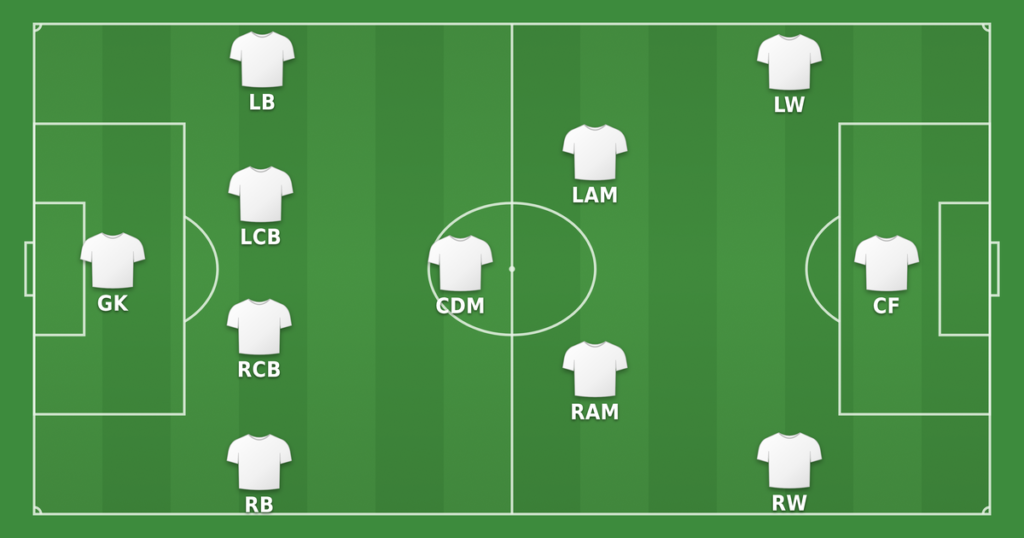
Football positions are the jobs players have on the pitch. Each team has 11 players, and one must be the goalkeeper. This guide explains football positions and roles in simple words, so anyone can follow it.
What Are Football Positions?
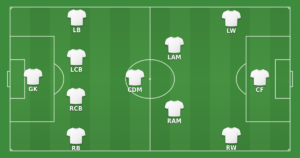
A team has four main role groups: goalkeeper, defenders, midfielders and forwards. Positions in football show where a player usually starts. Players still move during a match as the plan and the score change.
Main football player positions at a glance:
| Position | Short | Job |
| Goalkeeper | GK | Stops shots |
| Centre back | CB | Blocks central attacks |
| Full back | RB, LB | Guards the sides |
| Defensive midfielder | CDM | Shields the defence |
| Central midfielder | CM | Links defence and attack |
| Attacking midfielder | CAM | Creates chances |
| Winger | RW, LW | Stretches play wide |
| Striker | ST | Finishes moves |
Goalkeeper: The Last Line of Defence
What Does a Goalkeeper Do?
The goalkeeper is the only player who may handle the ball in open play, and only inside their own penalty area. When the team has the ball, the keeper passes to a defender to start an attack. When the team loses it, the keeper stops shots and tells teammates where to stand. On corners, the keeper catches or punches away crosses. If the team chases a late goal, the keeper may run forward for the last corner.
Defenders: Stopping the Other Team
Defenders protect the goal. Most teams play with three or four of them.
Centre Back: Defensive Anchor
Centre backs mark strikers and win high balls. When their team has the ball, they pass forward with care. After a loss, they run back to block shots. On corners, they usually stand near the goal, so they can head the ball away.
Full Back: Defend, Overlap, Deliver
Right backs and left backs guard the sides of the pitch. When their team attacks, they run past the winger to cross the ball. Then they sprint back if the team loses it. A wing back is a full back with more freedom to attack.
Midfielders: The Engine Room
Midfielders link defence and attack. They win the ball back and move it forward.
Defensive Midfielder: The Shield
This player breaks up attacks and passes to teammates. When the team builds from the back, this player stands next to the centre backs. On corners, they guard the edge of the box.
Central Midfielder: Box-to-Box
The central midfielder (CM) covers the most ground. They help the defence, pass the ball forward and arrive in the box to shoot. A box-to-box midfielder does this from one penalty area to the other.
Attacking Midfielder: The Creative Link
The number 10 looks for space between the opponent’s midfield and defence. For example, this player sends a through ball to a striker. After losing the ball, they press the nearest opponent.
Winger: Width and Speed
Wingers stay near the touchline, take on defenders and cross the ball. An inverted winger starts wide but cuts inside to shoot. Without the ball, wingers run back to help the full back.
Forwards: Turning Attempts Into Goals
Forwards score goals and help create them.
Striker vs Forward: What Is the Difference?
Forward is the big group. Striker usually means the main central scorer. When the team attacks, strikers hold the ball up and run behind defenders. When the team needs a late goal, coaches often add another forward.
What Is a False 9?
A false 9 is a central forward who drops into midfield. If a centre back follows, space opens behind for teammates.
Football Formation Positions
A formation shows how many players stand in each line, not counting the goalkeeper.
| Formation | Defence | Midfield | Attack |
| 4-3-3 | Two centre backs, two full backs | Defensive midfielder, two central midfielders | Two wingers, one striker |
| 4-4-2 | Two centre backs, two full backs | Two central, two wide midfielders | Two strikers |
| 3-5-2 | Three centre backs | Two wing backs, three central midfielders | Two strikers |
Formation Examples
4–3–3 Formation Positions
Three forwards stretch the pitch, while the midfield triangle keeps the ball moving.
4–4–2 Formation Positions
Two flat lines of four stay close together, and the two strikers work as a pair.
3-5-2 Formation Positions
Three centre backs guard the middle, and two wing backs give the team width. With three central midfielders and two strikers, the team has extra players through the centre.
Shirt Numbers and Positions
Shirt numbers give hints, but they are not fixed rules: 1 is the goalkeeper, 2 and 3 are usually full backs, 4, 5 and 6 are centre backs or defensive midfielders, 8 and 10 are central and attacking midfielders, 7 and 11 are wingers, and 9 is the striker.
Modern Football Positions: How Roles Overlap
Roles change a lot in modern football. Full backs step into midfield, wingers cut inside and forwards drop deep to link play. The plan, the opponent and the score can change a job within one half.
Indian Football and Positions
You can see every role when you watch the national team or ISL clubs such as Mohun Bagan, East Bengal, Bengaluru FC and Mumbai City. Watch how the goalkeeper organises the defence, how the centre backs deal with high balls and how the wingers take on full backs. Read our football guides and news, then spot each player type yourself.
Frequently Asked Questions
What Are Football Positions for Beginners?
Start with four groups: goalkeeper, defenders, midfielders and forwards. Then learn one role in each group.
Are Soccer Positions the Same as Football Positions?
Yes, because soccer is another name for the same sport.
What Does a Midfielder Do in Football?
A midfielder links defence and attack. They also win the ball back and pass it forward.
Can a Goalkeeper Use Hands Anywhere?
No. Hands are allowed only inside the keeper’s own penalty area.
Is a full back a defender or a midfielder?
A full back is a defender. A wing back, though, often plays like a wide midfielder.
For more football guides and match analysis, read KheloExch Sports.
Disclaimer: This guide gives general information, and roles change with each coach, team and match.
Sources: The number of players and the goalkeeper’s handling rule follow the IFAB Laws of the Game (Law 3 and Law 12). Position roles describe common coaching usage.
Source links: IFAB Laws of the Game