Chess

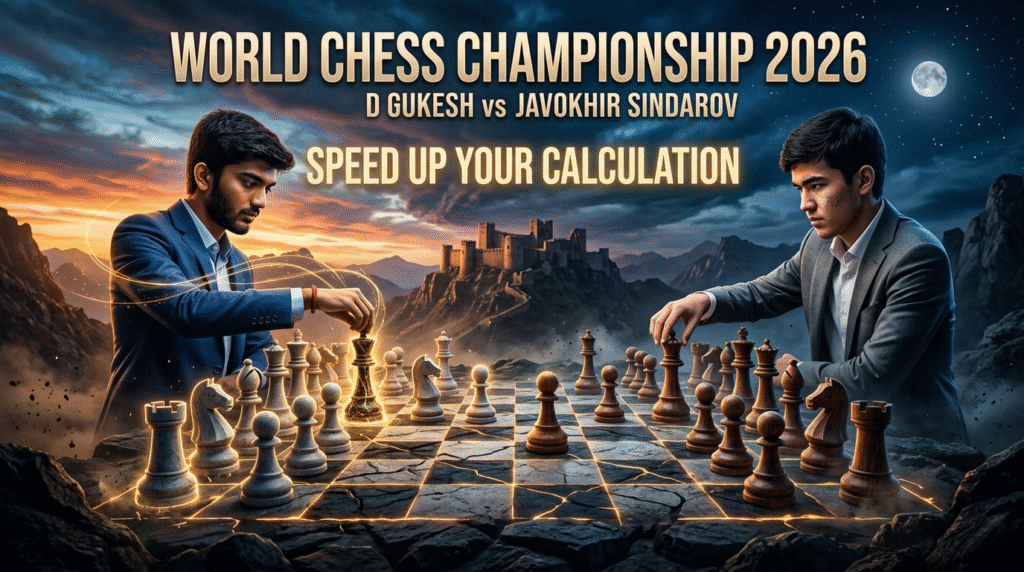
Gukesh and Sindarov play chess on a cliffside with glowing pieces and text "Speed Up Your Calculation" for the 2026 championship.
Chess

Speed Up Your Calculation: D Gukesh Handed Major Advice

As the chess world holds its breath for the highly anticipated 2026 World Chess Championship , all eyes are now on the reigning champion, D Gukesh. The young Indian prodigy is gearing up for a fierce conflict to keep his crown, defend his title, against Uzbekistan’s rising superstar Javokhir Sindarov. Yet before this landmark battle, a well known voice from Indian chess has offered some hard strategic guidance. Grandmaster Krishnan Sasikiran has been pretty clear, he warned the champion that he needs to quicken your calculation if he wants to reliably counter that razor sharp, rapid playstyle of his upcoming Uzbek opponent . . The Chaos Factor: Why D Gukesh Must Adapt D Gukesh has built this pretty formidable reputation on his ability to embrace absolute chaos across 64 squares. He seems to thrive in unconventional, highly asymmetric positions that leave normal grandmasters kinda completely disoriented, and yes it’s not subtle. Still, even if this high-risk approach makes him an incredibly lethal tournament player, it also shows a clear, distinct vulnerability when you stretch it into a long, grueling match format, where every tempo matters. As Krishnan Sasikiran put it—who famously served as a second to five time World Champion Viswanathan Anand—Gukesh’s habit of courting structural imbalances often comes with a heavy price, especially on the clock. “Sometimes Gukesh takes too much risk with his unconventional play, creating chaos and imbalance” Sasikiran remarked . “He is a champion of that kind of a game, but he often gets into time trouble.” So, to neutralize it before the first pawn is pushed, Sasikiran firmly thinks the priority should be obvious: speed up your calculation. Just keeping pace through complex tactical tangles with only minutes , or even seconds, remaining is a dangerous routine, particularly when you face a challenger who feels most comfortable under rapid time constraints.  Evaluating the Challenger: The Threat of Javokhir Sindarov Uzbekistan’s Javokhir Sindarov kinda earned his spot right at the championship table, by putting together a real masterclass at the 2026 Candidates Tournament in Cyprus. He moved through an elite field, totally undefeated, and still somehow managed to show profound opening preparation, plus an incredibly deep memory too. It was like everything clicked, at the right moments, again and again.    Feature Defending Champion: D Gukesh Challenger: Javokhir Sindarov Country India 🇮🇳 Uzbekistan 🇺🇿 Age (2026) 20 Years Old 20 Years Old Core Strength Imbalance, tactical resilience, match experience Concrete opening memory, speed, relentless momentum Main Vulnerability Recurrent time pressure in classical formats Lack of multi-game world championship match experience   Sindarov’s way of playing is kind of centered on real,  blistering-fast calculation, like he never really stops thinking in numbers. He leans a lot on pushing his opponents into awkward positions early on, and then it’s like, they have to spend their precious time on the clock. So if D Gukesh lets himself drift into those usual deep thought patterns in the opening and the first early middlegame , then Sindarov does have the technical sharpness needed to squeeze out an advantage, in a ruthless kind of way.  Strategic Shifts Needed for the World Chess Championship To make sure his title defense stays intact, Gukesh and his team have to put in a few sort of structural tweaks into their intense training camp, kinda like tightening the bolts, but also leaving room for feeling.  Streamlining Calculation Tree Search: Gukesh needs to learn to trust his high level intuition a bit more, instead of obsessing over every tiny branch in a disorderly position, all the way to some fully forced checkmate line.   Neutralizing the Opening Preparation: Since Sindarov has that deep memorization, Gukesh really can’t let himself get surprised. Picking solid, durable openings will keep him out of early time sinks, and out of that uncomfortable “scramble mode” feeling.   Improving Technical Endgame Conversion: In tight matches, overlooking an extra little endgame edge can be extremely punishing. Turning small pluses into full points without hemorrhaging time is basically the whole game plan.   “You don’t want to consistently find yourself in a scenario where your opponent is driving you into time trouble.” — Grandmaster Krishnan Sasikiran   Thankfully, match experience leans heavily toward the Indian superstar. D Gukesh has already been through the unusual psychological contest that comes with a full World Championship match cycle [Source: FIDE.com]. He knows how to pace both his physical focus and mental stamina over several weeks. Meanwhile, Sindarov is walking into territory that’s basically unexplored,  almost completely unfamiliar.   The Psychological Edge and Growing Rivalry There’s more tension around this match than just the technical prep stuff. Public comments from both sides seem to suggest, like it’s kind of obvious, that there is zero fondness to be found between these two 20-year-old icons. During the Grand Chess Tour’s Super Rapid & Blitz in Warsaw earlier this year, people saw a rare, super charged fist pump from Gukesh after beating Sindarov in a nasty, quick, sharp sequence. The battle lines are pretty clearly drawn though. This isn’t only one individual duel now, it turns into a generational showdown for the top spot between two up and coming chess superpowers, India and Uzbekistan. While Sindarov arrives with raw momentum and that ice-cold self belief, forged from his undefeated Candidates run, Gukesh has the tempered staying power of a reigning king who kind of knows what it takes to guard the crown. If he can take in Sasikiran’s advice and manage to accelerate his calculation, then he should patch up his most obvious structural weak spot and still stay the better bet to keep his throne.For more news like this follow Kheloexch.     Key Takeaways The advice , from GM Krishnan Sasikiran, is pretty direct: D Gukesh has to speed up his calculation, otherwise he might slip into chronic time trouble while the title match is going on.   The challenger , Uzbekistan’s Javokhir Sindarov, is hyper-prepared, and also a notably fast calculator. He basically stayed unbeaten to clinch the 2026 Candidates Tournament , so

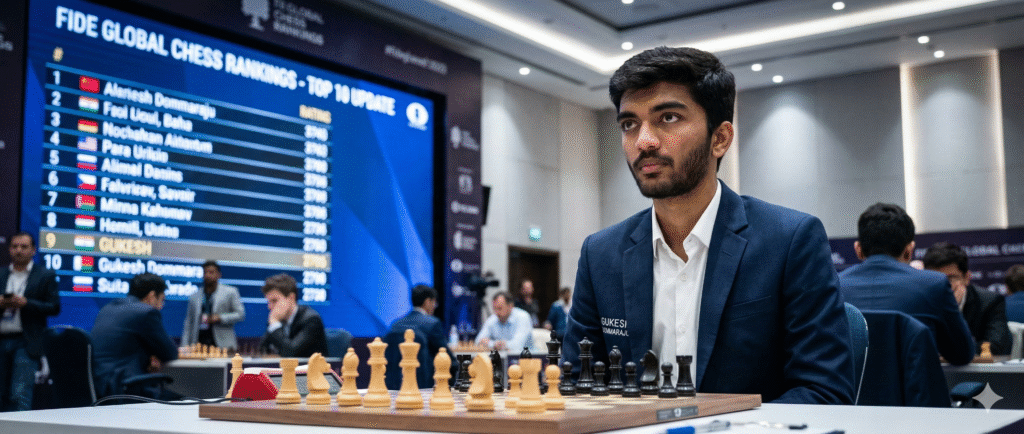
World chess champion Gukesh Dommaraju looking focused at a chessboard with the FIDE global chess rankings displayed on a large digital screen behind him.
Chess

How Gukesh Dommaraju Returned to the Top-10 in FIDE

The chess world experiences constant rating changes because of administrative decisions which have created major debates. The path to becoming a top ten player demands multiple years of hard work and almost perfect calculation abilities. The International Chess Federation (FIDE) intervened to help Gukesh Dommaraju who became the current world champion regain his position in the official top-10 rankings. The March 2026 global chess rankings underwent complete transformation because of this unexpected administrative action. A major tournament lost its validity because FIDE enforced its registration rules without exception. The young Indian prodigy reclaimed his status as one of the world’s top ten players after returning to the elite competition. The FIDE Oversight That Shifted the Global Chess Rankings Chess players check the FIDE rating lists every month to monitor how different players develop their skills. A player who achieves a top-ranking position will receive more tournament invitations and greater sponsorship opportunities and create a stronger historic reputation. The March 2026 update introduced an unexpected development because of a major administrative mistake. The governing body began using the Russian Chess Crown match results to calculate ratings without completing the necessary verification process. The officials discovered that this particular event had committed a clear breach of Article 0.2.1 of FIDE rating regulations. The rule establishes that any tournament which includes a player with 2700 rating must complete its registration process at least 30 days before the event starts. FIDE’s Qualification Commission removed the invalid event from the official system to maintain integrity according to their mission. The official status of Russian Grandmaster Sergey Karjakin changed to “inactive” status because he lost his place among active players. Gukesh who held the world number 11 position moved up one important ranking position because of this removal. FIDE provided players and fans with assurance that they implemented strict measures to stop data entry errors from happening again. Professional chess depends on accurate record-keeping which this correction demonstrates because nobody can escape the established rules. Why Gukesh Dommaraju Dropped Out of the Top 10 Initially Gukesh established his permanent legacy through his victory at the World Chess Championship which he won at age 18 in December 2024. The match concluded with Gukesh achieving victory over Ding Liren while demonstrating his exceptional tactical skills to worldwide viewers. The results from his tournaments during the 2025 and early 2026 period demonstrate his successful championship record despite facing ongoing difficulties in his competitions.  He suffered unexpected defeats at both the Tata Steel Masters which holds high status and the Prague International Chess Festival. His common opponents including Nodirbek Abdusattorov experienced a significant decline in his live classical rating because of the time-trouble errors he made during their matches. Professional players at the highest level face a severe awakening when they experience a loss of 40 rating points within one year. The Pressure of the Chess Crown The psychological burden of being the highest chess title holder brings extreme public examination. The global chess ranking system demands players to achieve constant success against opponents who show extreme dedication and preparation. The primary reason for top players to experience temporary rating drops after winning world titles is explained by these fundamental factors. The reigning world champion faces a special challenge because opponents prepare for the match with their highest possible dedication which makes every drawn game feel like a major victory for them. Champions use secondary tournaments to test novel dangerous opening strategies which they plan to use in upcoming title matches. Athletes who participate in multiple super-tournaments after completing an intense championship cycle will experience competitive weariness. The Broader Impact on India’s Chess Ecosystem India remains the top force in chess competitions despite the recent obstacles that their world champion faces in classical chess. The superstars of the sport led by Arjun Erigaisi and R Praggnanandhaa compete at the highest level during his championship period. The Indian federation maintains its position as the second-ranked organization worldwide because its Open category average only trails behind the United States.  The current era displays remarkable depth in Indian chess because Viswanathan Anand previously served as the only Indian player to reach the top 10. India maintains its position as the world’s strongest junior development system which presents the greatest challenge to other countries. The overall strength of a country as a chess powerhouse remains intact because single athletes experience only minor rating changes. What This Correction Means for Gukesh Dommaraju Moving Forward The young champion receives essential mental support through his return to the top ten rankings. The current situation confirms his status as an elite competitor while he faces difficulties in his competitive performance. The FIDE corrections do not provide a solution for the board problems that he has experienced in recent times. He needs to return to the accurate calculation methods which brought him his initial world title win to achieve long-term rating stability. The player will eliminate his late-game mistakes from the Prague match by improving his time management skills during important middlegame periods. The modern competition structure forces players to achieve multiple tournament wins because they need substantial success to improve their competitive ranking. True champions demonstrate adaptability which enables them to succeed while the administrative lifeline provides him essential time to develop his tournament approach. Moving Forward as a Champion Successful chess players need exceptional playing abilities and administrative support to reach their highest competitive level. The chess professional career path leads through difficult times which create intense pressure and extreme obstacles. The FIDE correction restored his status as an elite player after his recent over-the-board performance pushed him to a lower rank. Gukesh Dommaraju has already shown he can defeat major obstacles while proving his strongest opponents wrong. Fans can expect him to use this return as a powerful driving force which will help him reclaim his position as the world’s top chess player. The chess community is observing the young champion’s recovery after his recent defeat.  
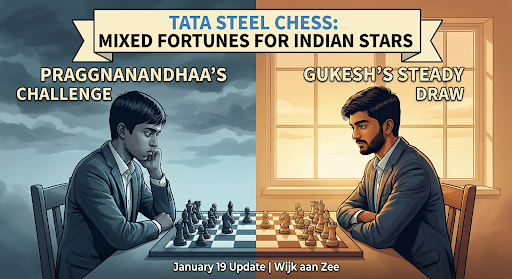
Illustration of two Indian chess players competing at the Tata Steel Chess Tournament.
Chess

Indian Stars Face Mixed Fortunes at Tata Steel Chess Tournament

Praggnanandhaa, as well as Gukesh, top-tier young chess pros, garnered major coverage on January 19th. Consequently, the Tata Steel Chess event was ruthless with the nation’s most revered grandmasters. The Wijk aan Zee event took a toll on the players in every respect. All of them were tested in patience, form, and emotional control. Indian fans followed each move, hoping for momentum and reassurance. However, results revealed the brutal honesty of elite-level chess. Praggnanandhaa Loss Analysis: Tata Steel Chess Tournament The news regarding the Indian teenager’s defeat at Tata Steel Chess was again disheartening. Although expectations remain high, the Masters section allows no breathing room. Each opponent arrives armed with deep preparation and fearless intent. Praggnanandhaa pushed hard but lost control during critical middle game moments. Consequently, pressure mounted as small inaccuracies quickly snowballed. The Tata Steel Chess Tournament demands constant precision across long sessions. Because one loose calculation often decides everything, recovery becomes difficult. Praggnanandhaa showed fight but lacked his usual tactical sharpness. Fans noticed hesitation where confidence once flowed freely. Still, setbacks form part of every champion’s education. Young grandmasters grow through resistance, not comfort. Nonetheless, that being said, Pragg has recently bounced back from losses on a bigger stage. For him, defeat faced here does not mean that it is the end of the world. Moreover, it does not even necessarily mean that he will perhaps fail to prove his brilliance further ahead in the future. Presently, he is progressing through a phase that calls for patience and control. Eventually, lessons from defeat strengthen long term growth. Gukesh Tata Steel Draw Shows Championship Maturity Gukesh Tata Steel draw headlines offered stability amid a turbulent round. Meanwhile, the world champion faced Jorden van Foreest with calm authority. Playing black against a former tournament winner demands discipline and restraint. Gukesh accepted the draw after neutralising aggressive plans. Therefore, the result reflected strategic maturity rather than missed ambition. Elite chess values survival as much as attack. Because tournaments span weeks, energy management matters deeply. Gukesh avoided unnecessary risks while maintaining structural balance. Van Foreest pressed but found no clear breakthrough. The draw also helped Gukesh maintain his strength for the more difficult rounds that are still to come. Champions know exactly when to strike and when to give in. Likewise, Gukesh demonstrated control over tempo and emotion. Such games rarely dominate highlight reels but shape final standings. Fans recognised the quiet strength behind the result. Still, expectations remain high for sharper outcomes ahead. Tata Steel Chess Reflects Global Rise Indian chess January 19 results reveal both struggle and strength at the highest level. Moreover, multiple Indians competing in the Masters section signal global respect. Ten years ago, such representation felt unimaginable. Now, the nation supplies contenders rather than participants. Consequently, pressure rises alongside visibility. Tata Steel Chess acts as a measuring stick before world championships. Because every opponent mirrors future title challengers, preparation matters. Wins build belief while losses expose gaps needing repair. Indian players treat each round as structured learning. Instead of panic, focus stays on the process. The current generation blends youth with deep preparation. Setbacks, though painful, can hardly shake the long-term plans. Support systems around Indian chess continue improving steadily. Coaches, analysts, and seconds sharpen competitive edges daily. Therefore, progress remains visible beyond daily results. Why These Results Matter Beyond One Tournament Praggnanandhaa Tata Steel Chess outcomes influence rankings, confidence, and narrative. Meanwhile, Gukesh Tata Steel draw reinforces championship consistency. Together, these moments shape perception heading into future events. Fans often judge form quickly, sometimes unfairly. However, elite careers unfold across seasons, not single rounds. Chess careers mirror long distance races. Because stamina outweighs sprints, composure decides outcomes. Indian players understand this reality better than ever. Exposure to relentless competition builds mental armour. Eventually, this experience converts into titles. January 19 offered no fairy tale sweep. Instead, it delivered realism and resilience. Indian chess continues climbing despite temporary slips. Each game sharpens instincts and deepens maturity. Moreover, the journey remains firmly on track. Praggnanandhaa Tata Steel Chess challenges, and Gukesh draw together capture Indian chess today. Therefore, fans should read results with patience rather than panic. Setbacks teach precision while steady draws protect momentum. Indian stars continue learning against the world’s toughest opposition. If you follow Indian sports closely, keep tracking these battles as they quietly shape future champions.

Chess

London Chess Classic Kicks Off with Exciting Draws

The Elite Tournament of the London Chess Classic started with a flurry of exciting games with all draws, however, there was much fight still on the board. Grandmaster Sam Shankland barely held on against Alireza Firouzja in an Exchange Grunfeld that did not come together as planned. All of the rounds ended peacefully; however, they produced some great tactical depth and creative ideas for what is going to be an exciting week of chess. Shankland, who faced Firouzja, quickly moved into a very sharp middlegame after a difficult opening. At many points during the Game Shankland seemed to find himself in trouble; however, he was able to maintain the balance and draw. Although there were times when Firouzja could have put pressure on, Shankland’s strong defensive moves kept him safe from danger and showed that he is capable of standing strong under pressure. Other Highlights from Round 1: Gawain Maroroa Jones vs. Nodirbek Abdusattorov – A beautiful queen sacrifice gave Abdusattorov a chance to win; however, he chose to repeat rather than risk losing. Pavel Eljanov vs. Nikolas Theodorou Abhimanyu Mishra vs. Nikita Vitiugov Luke McShane vs. Michael Adams Even though all the games ended as draws, fans were treated to clever tactics, strategic sacrifices, and strong defensive displays. The London Chess Classic: A World-Class Event The London Chess Classic is a prestigious chess tournament that was first held in 2009. While it is no longer considered a “Super Tournament,” the presence of world class players such as Firouzja, Abdusattorov and Shankland (a quarter-finalist in the World Cup) will guarantee that it will be a highly competitive tournament. Hundreds of chess fans are expected at the event starting Thursday at the Emirates Stadium, the official venue for the tournament. The first round had previously taken place at a different venue and again showed the level of quality and excitement that chess fans will see during the entire London Chess Classic. With world-class players in attendance and tactical battles starting from round one, the London Chess Classic will be a thrilling celebration of chess!
Chess

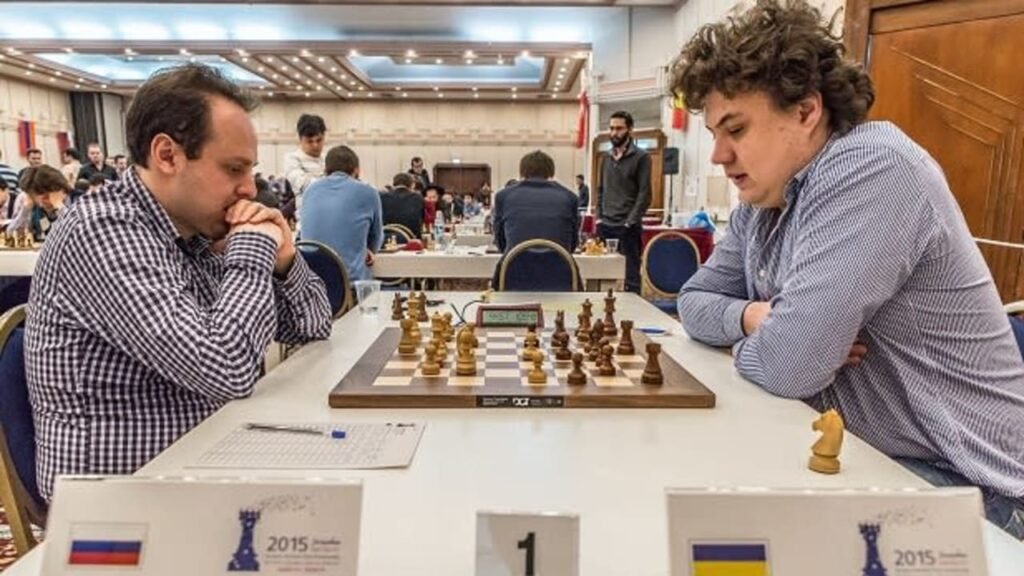
Jerusalem Masters Officially Begins Without Gelfand Amid Federation

The city of Jerusalem is gearing up to host its largest chess festival since the devastating events of October 7 and the war in Gaza. The festival will take place from 26th November until 3rd December and has been organised by the Israel Chess Federation, the Ministry of Culture and Sports and the Jerusalem Municipality under the concept of Tolerance and Unity. This will be an exciting week of chess, however, the absence of one of Israel’s greatest chess players, Boris Gelfand, leaves a dark cloud hanging over what should be an exciting time for chess. The festival will start with a massive two-day open rapid tournament on 26 – 27th November with over 400 participants. Following that, from 30th November – 3rd December, there will be an invitational tournament known as the Jerusalem Masters. This tournament will be a round robin with twelve players where the top four will go through to a knockout stage. Ten players have been invited thus far and two players will qualify through the open event. The prize fund for the tournament is a record-breaking amount for chess in Israel. The open event will have a total prize fund of $30,000, of which $5,000 will go to the first-place winner. The Masters will have a staggering total prize fund of $140,000, the largest ever for an Israeli chess event. Additionally, there will be special prizes totalling $26,000 for the top Israeli finishers. The Masters event will feature an exceptional collection of competitors, with stars of the highest quality—such as former World Champion Viswanathan Anand, two-time challenger Ian Nepomniachtchi, and the rapidly rising Indian Talent, Arjun Erigaisi—headlining the event, in addition to five top grandmasters from Israel. However, the absence of Boris Gelfand, considered to be the greatest chess player in Israeli history, raises questions over the current status of Israel’s chess community. Gelfand has been a top World Championship challenger several times, has been in a prolonged battle with the Israel Chess Federation, and his continued absence as a competitor in the Masters confirms the growing schism between him and the Federation that has become quite public. Despite the controversy, the Jerusalem Masters will undoubtedly be a momentous event, filled with world-class chess and a powerful message of perseverance, solidarity and resilience.
Chess

Javokhir Sindarov Crowned 2025 FIDE World Cup Champion

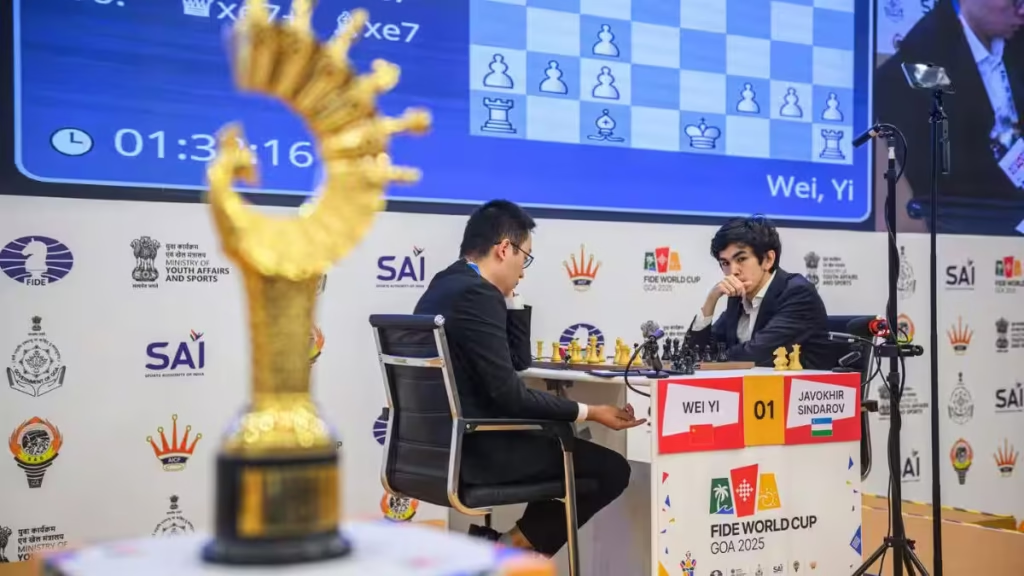
19 years old Uzbek prodigy Javokhir Sindarov has achieved an important milestone in his career by winning the 2025 FIDE World Cup in Goa. Sindarov defeated world number 11 Wei Yi in an extremely close and unpredictable tiebreak, taking home the title with a 2½–1½ playoff win after a whirlwind of rapid moves filled with missed opportunities, quick momentum shifts and exceptional displays of determination from both players. The initial rapid game was indicative of where this match would go. Sindarov created what was supposed to be a winning position, which would have led him to a favorable pawn endgame. However, he hesitated at the most important time, allowing Wei Yi to escape with a draw, much to the relief of the Chinese player who had been on the defensive for most of the game. If Sindarov had successfully converted this position, Wei Yi would have come into the remainder of the match under a considerable amount of pressure. Although it looked much different, game two played out quite differently due to a different color (black instead of white). After an excellent opening by Sindarov, he was able to equalize and start to look for any long-term opportunities. Unfortunately, as the game developed into a more complicated middle game, Sindarov made an error in judgement which allowed Wei to take control of the position. It seemed at one point that Wei would be able to finish Sindarov off with a powerful move. However, due to both complex tactical positions and extreme time pressure, Wei was unable to find a winning variation. Instead, the tables turned when Sindarov made a precise counterattack aimed at taking advantage of the weaknesses in Wei’s position.  With only seconds left on his clock and unable to coordinate his pieces with any type of coherent thought, Wei was unable to hold back against the attack and it eventually crashed through to capture victory for Sindarov and the World Cup title. Thus, Sindarov has achieved not only the coveted title of World Cup Champion but has also solidified himself as an incredible young talent who possesses a great deal of tenacity and determination.
Chess

R. Praggnanandhaa Aims For 2026 Candidates’ Spot At London Chess Classic

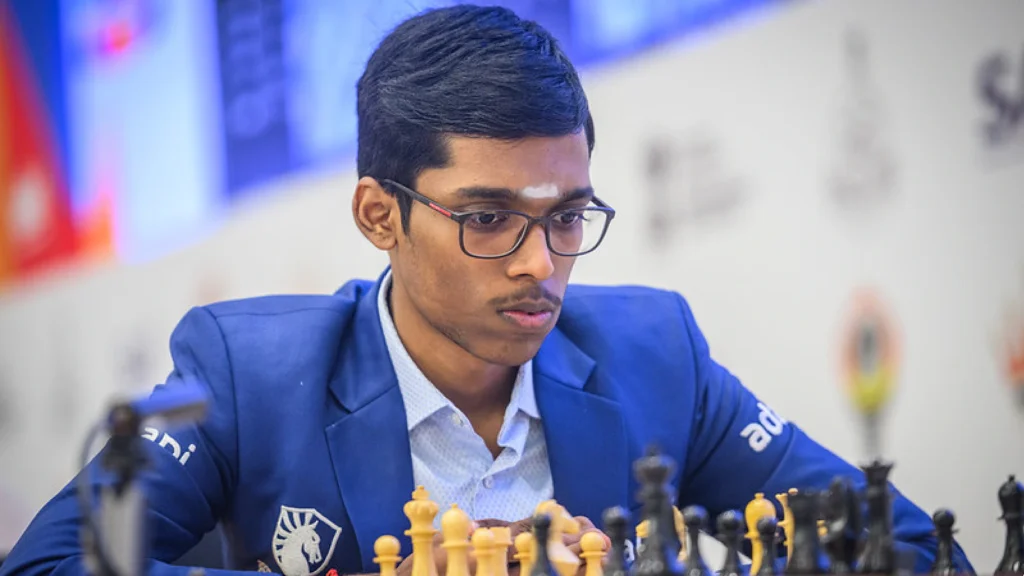
The Indian Grandmaster Rameshbabu Pragg is making a significant move at the London Chess Classic 2025 with the hope of getting his spot in the 2026 Candidates Tournament. He does not treat this tournament just as a competition; it is an important step for him to become one of the challengers for the World Chess Championship. Why the London Chess Classic Matters for R. Praggnanandhaa The London Chess Classic (LCC) 2025 is scheduled to take place from November 27 to December 3, featuring a nine-round, 120-player Swiss tournament in the open section. The participant’s average rating is extremely high, about 2581 Elo. Pragnanandhaa intends to gain FIDE Circuit points by participating in this open event. He, in fact, is at the top of the 2025 Circuit standings right now. This gives London a chance to shine for him: a powerful concluding act here might almost assure his entry into the Candidates. The Stakes: Why This Isn’t Just Another Tournament 2026 Candidate On The Line The Candidates Tournament for 2026 is among the most significant chess tournaments, as the victor will face the World Champion. One of the places for the Candidates is awarded through the FIDE Circuit, a ranking system where players gather points based on their performance in a series of approved tournaments. Praggnanandhaa is at the top of the Circuit at the moment with his total of 107 points from seven counting events. The player right below him on this list is Vincent Keymer, but Keymer is very much behind; thus, Pragg’s position is pretty much unassailable. In case Praggnanandhaa gets to the top three in London, the win would virtually confirm his place in the Candidates. A Calculated Risk And A Bold Move A section of the public might consider it a gamble for R. Praggnanandhaa to enroll in the open Swiss chess tournament. The strength of many capable grandmasters might pose a strong opposition and, in a Swiss-type of tournament, one bad day may even cancel his cause altogether. However, that’s exactly the reason it might turn out to be a very profitable strategy: he has no points from the open events in his Circuit tally at the moment, which means that any good finish will greatly increase his total. Some chess experts believe that Pragg is not only safeguarding his lead but also forcefully securing it. Through London Chess Classic 2025 participation, he intends to close the door on other contenders, especially since the main competitor for the Circuit spot, Keymer, would require a remarkable run to pull even. What Went Wrong At The World Cup  Praggnanandhaa participated in the FIDE World Cup earlier in 2025, which was the other way to qualify for the Candidates. Unfortunately, he lost to Daniil Dubov in the tie breaks in the fourth round and thereby got eliminated. His exit was a major setback, as a lot of people had expectations from him that he would use the World Cup to book a place for himself. Indian fans were more let down: at the same event in Goa, no Indian player made it to the final four. Now that the road is closed, Praggnanandhaa’s best (and possibly the only one) realistic opportunity is to get as many FIDE Circuit points as possible – and London Chess Classic 2025 is a key part of that strategy. How The FIDE Circuit Ranking Works  To comprehend the significance of Praggnanandhaa’s performance in London, it is necessary to begin with a summary of the operation of the FIDE Circuit:  Throughout the year, the players take part in a succession of eligible events.  The final score of a player in the Circuit is the total of his/her seven best tournament results (or fewer if he/she did not play seven).  The player with the highest score on the Circuit gets the Candidates spot.  This system makes it possible for the strong performances in major events to like as the London Chess Classic 2025, to become deciding factors. R. Praggnanandhaa’s Mindset and Strategy  Pragg’s choice of London as his playing venue is a clear indication that he is taking no risk at all. The chess experts even say that he is not only maintaining his lead, but also trying to make it so large that no one can take it away from him. At the same time, he is aware that if he plays poorly, he will lose not only upcoming Circuit points but possibly even his ranking or, worse, energy that he would need for the other major tournaments. Nevertheless, the general opinion is that the potential benefits are greater than the risks involved. What Kheloexch Fans Need To Know In case Pragg’s good fortune continues in London and he gets through the 2026 Candidates, then he will be among the contenders for the World Championship cycle. The 2026 Candidates is planned for Cyprus, between March 28 and April 16. For More Updates Follow Kheloexch

Scroll to Top