Arsenal Blow 2-0 Lead in Dramatic 2-2 Draw at Wolves
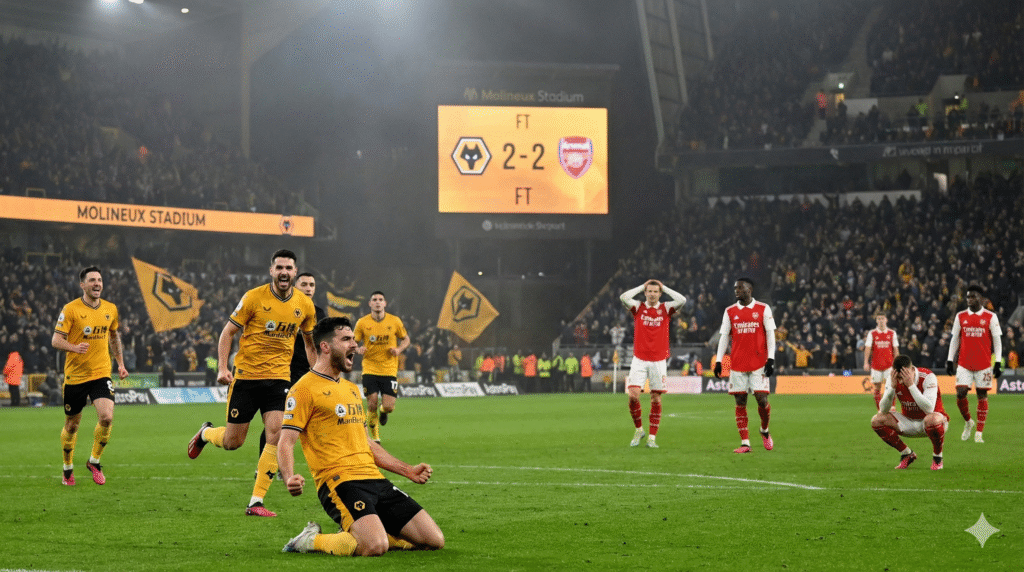
Football shows that championship teams maintain their natural human characteristics. The match becomes unrecoverable until unexpected events create sudden changes to the game. Arsenal faced Wolverhampton Wanderers in an English Premier League match which ended with a 2-2 score at their home stadium on Wednesday night during cold weather conditions. The Molineux match between Mikel Arteta’s squad and the division’s lowest ranking team became an expected victory for his team. The first hour of the event progressed according to the initial schedule. The visiting audience reacted with total disbelief at the incredible comeback which Rob Edwards’ team achieved during their match. How the Match Unfolded The fixture needs this important basic overview because it explains all ongoing match activities. The match score between Arsenal and Wolves ended in a draw because both teams scored two goals each. The Gunners built a 2-0 advantage through goals from Bukayo Saka and Piero Hincapie but lost their victory when they allowed two goals during the final moments. The hosts received a point after Hugo Bueno scored a beautiful curling goal and Tom Edozie who was making his first appearance scored an equalizing goal in the 94th minute. The match began with the visiting team showing all the traits of a team that would win the championship. Arteta made an intriguing tactical tweak by deploying Saka centrally in a number 10 role. The team experienced benefits from the modification. Complete Dominance Through First Half Declan Rice discovered an open area on the left side after five minutes of the match had passed. He delivered an exquisite inswinging cross which reached the penalty area. Saka correctly anticipated the ball’s flight path because he completed his run at the precise moment to head the ball through the legs of Wolves goalkeeper Jose Sa. The England player scored his goal after remaining scoreless for a short time which made the home fans quiet. Second Half: The Momentum Shift The Gunners came out after the halftime break looking to kill the game off entirely. They thought their efforts had succeeded when the 56th minute arrived. Gabriel Magalhaes delivered an excellent pass that pierced through the Wolves defensive lines to reach Piero Hincapie. The left-back blocked the defender and drove a strong shot that reached the top of the goal. The goal received official recognition after a tense VAR check examined a potential offside situation. Hincapie scored his first goal for the club which caused the away fans to start celebrating. The stadium audience believed the match had finished after the score reached 2-0. The Unlikely Wolves Comeback The Premier League table shows that Wolves occupy the last position in the standings. Before this match, they had a measly nine points and were staring down the barrel of a historically poor season. But instead of folding under the pressure they came out swinging. The match experienced its major turning points at these specific moments which altered the entire match outcome. The 61st minute shows Hugo Bueno executing his wonder strike when he received the ball from the right penalty area boundary. He shifted the ball to his left foot and executed a curling shot that reached the top corner of the goal. The goalkeeper David Raya had absolutely no chance to defend the shot. The Psychological Shift: The away team established a defensive position immediately after Bueno scored his goal. The team focused on stopping time while they held their advantage instead of attempting to score their third goal which would guarantee victory. The 94th minute of the match features Edozie’s dream debut performance. A cross delivered late in the stopping time created complete disorder inside the penalty box. The goalkeeper Raya crashed into his defender while he released the ball to 19-year-old substitute player Tom Edozie. He shot the ball which struck the post before it hit Riccardo Calafiori and rolled into the goal. The stadium absolutely exploded. Edozie made his senior debut for the first time and he scored a goal which could determine the outcome of the Premier League season. Tactical Insights: Why Did the Gunners Collapse? Top-level competition results from matches force teams to lose their lead when they encounter particular tactical setbacks which the match analysis will identify. Arsenal abandoned their authentic playing style to compete in this match. The team used a deep low defensive block instead of executing their strategy which required them to maintain possession of the ball and restrict their opponent’s opportunities. The Wolves team used their attacking power to create more offensive plays because they had no fear of facing quick counterattacks. The midfield lost its composure because the team needed a calming player to control the ball during high-pressure situations. Rob Edwards who serves as the Wolves manager received full recognition for his effective player substitutions. He brought in players with high speed to play during the last minutes of the match while he told his wingbacks to skip all midfielding duties. Their strategy of delivering direct crosses into the box forced defenders to make urgent tactical choices while they played in hazardous, icy conditions. The last equaliser occurred because the defenders failed to communicate effectively while facing continuous offensive pressure. A Night of Nerves at Molineux The Molineux press box allowed visitors to experience stadium atmosphere changes which affected indoor stadium areas. The stadium erupted into complete silence when Hincapie scored his second goal to make the score 2-0 except for travelling fans who celebrated their victory in one stadium section. The home audience gained energy when sleet began to fall and temperatures reached freezing temperatures. The spectacular goal by Bueno created the moment which ignited the match. The crowd reacted to every Wolves tackle as though they had just scored a match-winning goal.The players who led the league began to show signs of anxiety during the match. The team lost passing accuracy during the second half because they could not complete basic passes which had worked well during the first half. The stadium erupted