others

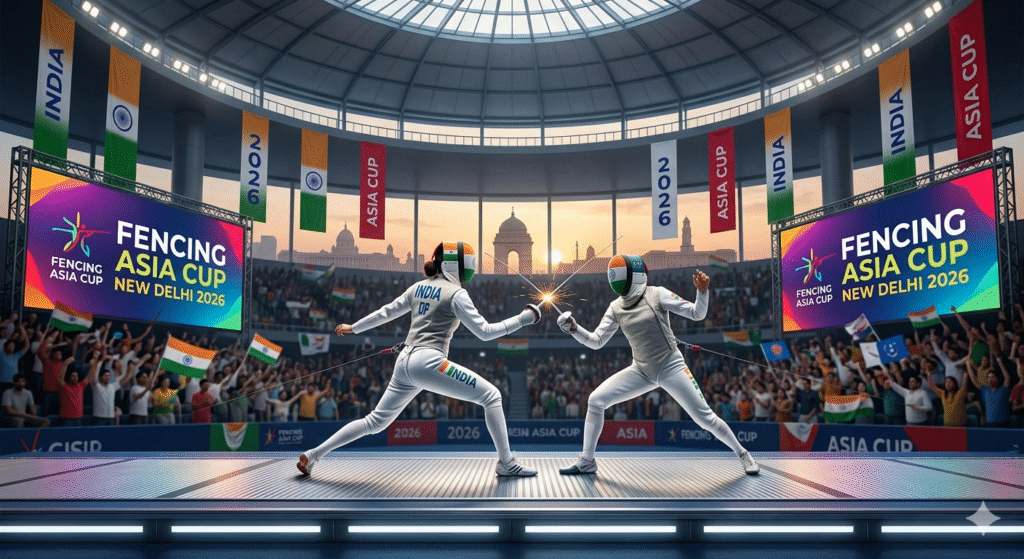
Two female fencers, one in Indian colors, clashing sabres in a large, indoor sports arena during the Fencing Asia Cup 2026. Banners and digital screens clearly display "Fencing Asia Cup New Delhi 2026," with the India Gate visible through the arena's glass wall.
others

India to Host Asia Cup of Fencing Between June 19 and 24 in New Delhi 

Indian sports are kind of stepping onto a huge global stage as India sets itself to host the Asia Cup of fencing between  June 19 and 24 in New Delhi. Officially called the Asian Senior Fencing Championships 2026, this landmark moment is being framed as the first time India has ever staged a continental-level fencing tournament, like ever.   For a nation that was sort of historically known for cricket, archery, and wrestling, bringing in the absolute top tier of the sword-fighting world is an undisputed game-changer. The six day elite contest is expected to turn the iconic Bharat Mandapam into a high-stakes arena where Olympic legends and emerging stars collide , in a very real way. Why the Asia Cup of Fencing Matters for India   The upcoming continental showpiece is way more than just a routine tournament. People keep calling it the Asia Cup of fencing ,and sure it sounds familiar, but it actually feels bigger. Widely known as the most prestigious fencing competition across the Asia-Oceania zone, it’s sort of an annual highlight that matters a lot for India too.   Tournament Profile: Asian Senior Fencing Championships 2026 Dates:            June 19 – June 24, 2026 Venue:            Bharat Mandapam, New Delhi Participants:     32 Powerhouse Nations Medal Events:     12 Categories (Individual & Team) Total Medals:     48 Medals (12 Gold, 12 Silver, 24 Bronze)   Honestly the stakes feel exceptionally high this year. The 2026 championship is a kind of direct qualification path into the Asian Games in Japan. And on top of that the whole event gives crucial ranking points that will basically decide the global standings, and in turn will form the competitive qualification road toward the Los Angeles 2028 Olympic cycle, so yeah it matters a lot.   The Indian Contingent and Star Attractions As host nation India is fielding like a full strength squad of 24 elite fencers. The home challenge will be fiercely spearheaded by Indian Olympian Bhavani Devi (Sabre) , though somehow it already feels like a given.   Bhavani Devi permanently etched her name into Indian sporting folklore by becoming the country’s first ever fencer to qualify for the Tokyo Olympic Games. After that she also proved her continental pedigree, by clinching a historic bronze medal at the 2023 Asian Championships.   Alongside Bhavani Devi, the Indian team has a bunch of marquee trailblazers , and they are not only there for numbers:   Tanishka Khatri (Épée): India’s rapidly rising star who has repeatedly shown she can match strides with Asia’s best.   Gisho Nidhi (Sabre): a vital pillar of technical aggression, plus invaluable international know how in the team formats.   Karan Singh (Sabre): the Asian Olympic qualification silver medalist who brings sharp clutch instinct to the piste. Global Superstars Landing in New Delhi Indian sports fans are in for a real, up close look at fencing in its highest purest tier. The tournament brings big, crowd shaking entries from 32 powerhouse nations, and it also includes the reigning Olympic Gold Medalists pretty much the top of the heap, honestly.  Cheung Ka Long (Hong Kong): The back to back reigning Olympic Individual Foil Gold Medalist.   Oh Sang-uk (South Korea): The reigning Olympic Individual Sabre Gold Medalist, and also an international fencing icon.   Yamada Masaru (Japan): The Olympic Gold Medalist, plus a dominant force in men’s Épée. Tournament Structure and Weapons Explained If you’re a spectator tuning into the [Internal Link: Fencing Sports Guide] or you’re actually watching live at Bharat Mandapam, the tournament will roll out 12 separate medal events , sort of divided between solo and squad formats for both men and women. The whole contest kinda turns on three weapon disciplines, each one with its own strict tactical rules , and it matters a lot: Foil: this is a light thrusting weapon and points are only awarded when the tip of the blade lands on the opponent’s torso. That means the front or back counts, but the limbs don’t , and the head also doesn’t. Épée: a heavier thrusting weapon where the full body becomes the valid target, from the head down to the feet. In this one, whoever scores the first touch gets the point. And if they happen to touch at the same time, then both fencers get the point. For more sports related news like this follow kheloexch. A Summit of Power: The 39th FCA General Assembly India’s major role in the sport’s immediate future is going to be even more solidified off the strip, so to say. While the main competitive action is happening, New Delhi will also welcome senior sports executives and 42 delegate members coming in from across the continent for the 39th Fencing Confederation of Asia (FCA) General Assembly. This is the first occasion India is hosting the governing body’s main administrative summit, the premier kind of thing. Interim International Fencing Federation (FIE) President Abdelmoneim El Husseiny is expected to attend as well, which basically puts New Delhi at the absolute epicenter of world fencing diplomacy this June. Even though nearby nations like Pakistan and Afghanistan decided not to file entries before the registration deadline, the overall turnout stays huge , and in turn it keeps reinforcing India’s position as a top-tier place for international sports tourism in Kheloexch .   Key Takeaways Historic Milestone: India hosts the prestigious Senior Asian Fencing Championships for the first time ever from June 19 to 24, 2026. Elite Venue: The world-class Bharat Mandapam in New Delhi will play host to athletes from 32 powerhouse nations. High Stakes: The tournament is a direct qualifier for the Asian Games and distributes vital ranking points for the Los Angeles 2028 Olympic cycle. Indian Leaders: A full 24-member Indian squad is anchored by icons Bhavani Devi, Tanishka Khatri, and Gisho Nidhi. Tech Pioneer: The event will actively debut a state-of-the-art AI-powered video referral system. FAQs When and where is the Asia Cup of fencing taking place? The tournament, formally

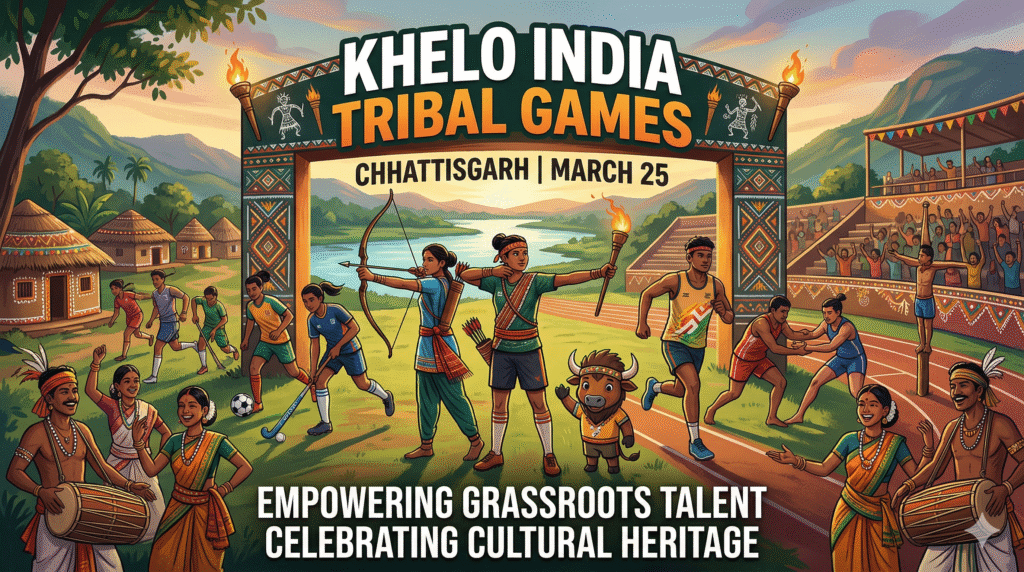
An illustrative banner for the first Khelo India Tribal Games in Chhattisgarh, featuring indigenous athletes competing in archery, hockey, and football, alongside the mascot Morveer and traditional tribal art.
others

Chhattisgarh is Set to Host the First Khelo India Tribal Games

The unifying power of sports has always united people throughout history. The athletic competitions show how diverse groups can unite to display their exceptional abilities. We are thrilled to see that the very first Khelo India Tribal Games will officially kick off on March 25, 2026. The event will operate as a historic sporting milestone because it dedicates all its activities to indigenous athletes. The state of Chhattisgarh will host the large event because it possesses deep cultural heritage as a state. The athletic competition will involve more than 2300 athletes and approximately 3700 total participants. The fans will witness high-energy shows which will occur in different intense sports events. The initiative goes beyond its competitive aspect to honor a lasting tradition that values physical strength and community togetherness. The upcoming tournament has special characteristics, which we will examine in this article. Why the First Khelo India Tribal Games Matter Indigenous athletes have been denied access to mainstream sports facilities since the past 50 years. Currently, positive changes are beginning to take place. The Khelo India initiative exists to provide support for this specific resource requirement. Young athletes from distant villages now possess an established route which leads to their chances of competing at national and international events. A Platform for Untapped Natural Talent The former Indian national football team captain Bhaichung Bhutia demonstrated how natural sports talents exist in these communities. He explained that indigenous youths develop exceptional athletic abilities which they maintain throughout their entire lives. Veteran coaches have observed that these players maintain strict discipline because they choose to leave their mobile devices behind during training sessions, which helps them achieve maximum concentration. The sports field contains many talented athletes who need proper training methods because those methods have been absent through most of history. The upcoming event will solve the problem which has existed for many years. Professional scouts from all national sports federations will come to the event for the purpose of discovering new talent. Dedicated athletes can now achieve their highest potential because geographical boundaries and personal history no longer restrict their possibilities. What to Expect in Chhattisgarh This March The host state which has more than 32% of its people belonging to tribal communities creates an ideal environment for this grand celebration. The event combines local cultural elements with standard urban tournament practices which occur inside stadiums. The excitement across the area has reached a noticeable level after regional grassroots events achieved their major success during the Bastar Olympics. Key Venues and Host Cities The quick competitions will take place across multiple arenas instead of a single large stadium. The games are divided into three cities which hold cultural importance for the Chhattisgarh area. The capital city of Raipur will host hockey, football, swimming and weightlifting competitions. The city of Jagdalpur will function as the central athletic center for high-energy sports and track events which take place throughout Bastar. The northern region north of Ambikapur will host wrestling and traditional sports because it has attractive highland areas. The decentralized locations of the venues enable local fans to attend and support their home states. The stadiums will create an intense atmosphere because of their operational setup. Exciting Sports Disciplines on Display The tournament features a carefully balanced mix of mainstream and traditional sports. The athletes will pursue medals through competition in seven core disciplines which include Archery Athletics Football Hockey Swimming Weightlifting and Wrestling. The football matches will showcase female athletes who started their sports journey at the grassroots level and subsequently participated in Asian competitions. The wrestling matches will showcase local talented athletes who will battle their opponents with remarkable determination. The action-packed schedule includes two demonstrative sports which include Mallakhamb and Kabaddi. The traditional games carry great cultural significance for the regions which take part in the games. The national exhibition of these traditional games enables the preservation of indigenous athletic history which will benefit future generations. The Cultural Significance Behind the Games The event serves as a complete cultural celebration which competes with its athletic contests. The event elements honor all aspects of the participants’ traditional heritage. The performance of the athletes creates conditions that enable their distinctive lifestyles to become highly visible. Meet Morveer: The Official Mascot Every major sporting event absolutely needs a memorable mascot to represent its spirit. For this historic occasion, the organizers proudly introduced “Morveer.” In the local Chhattisgarhi language, “Mor” translates to “our own,” while “Veer” translates to “brave.” As a result, Morveer perfectly embodies the courage, pride, and fierce identity of the competing youth. This powerful symbol gives every participant an identity they can proudly claim. The Superfood Diet of Future Champions Have you ever wondered exactly what fuels these incredible, high-stamina athletes? Interestingly, their natural endurance is deeply rooted in traditional, everyday food habits. For decades, indigenous communities have relied heavily on nutrient-dense local diets. Rather than consuming expensive, artificial supplements, they thrive on whole foods grown right in their backyards. Millets: These ancient grains provide sustained, slow-release energy throughout long training sessions. Drumsticks (Moringa): Packed with vital iron and essential vitamins for rapid, effective muscle recovery. Green Leafy Vegetables: Absolutely essential for maintaining overall immunity and solid bone strength. Although these simple ingredients are now trending globally as expensive “superfoods,” they have always been affordable daily staples in rural Chhattisgarh. Therefore, modern sports nutritionists can actually learn quite a bit from these time-tested traditional diets. How You Can Support the Athletes The thrilling games which you watch will start your journey into your complete participation. The grassroots sports development process requires you to implement specific actions which you can start doing today. First, make sure to tune into the live broadcasts on DD Sports or Prasar Bharati starting March 25. The implementation of your viewing activities results in a major increase of viewers who watch the events. More funding and important sponsorships for upcoming tournaments come to organizations which receive higher visibility through their presence at events. You have the option
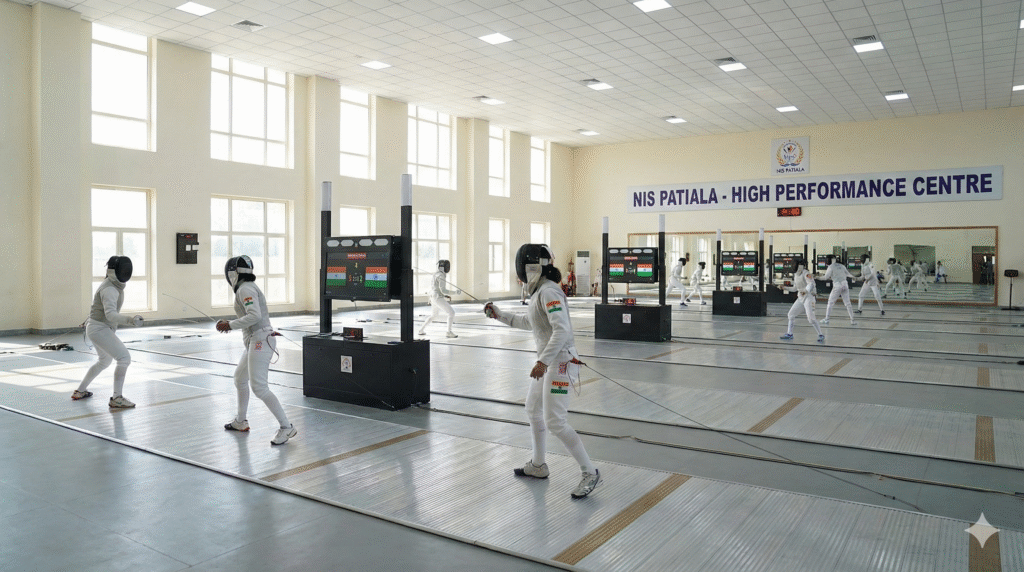
Indian fencers training on international-standard pistes at the new High-Performance Centre, NIS, Patiala.
others

Indian Fencers Get World-Class Facility at NIS, Patiala

Fencing serves as the most visible demonstration of India’s expanding sports development throughout the country. Indian fencers received their biggest boost for Olympic and Asian Games success when the High-Performance Centre (HPC) opened its doors at the Netaji Subhas National Institute of Sports (NIS) Patiala. The dedicated facility which was built at a cost of Rs 22.83 crore represents a complete change from the previous training methods which used temporary facilities.   Athletes had to deal with insufficient infrastructure throughout multiple years. The new centre will help establish a connection between local facilities and worldwide athletic benchmarks. The fencing community experiences increased motivation because they now possess top-level training tools which they can find in one location. A New Dawn for Indian Fencers at NIS, Patiala The new HPC is not just a building; it serves as a complete system that supports its mission to achieve excellence. The Sports Authority of India (SAI) has built a facility that competes with the world s top athletic facilities which includes European sports centers. The center contains a multipurpose indoor fencing hall which has international-standard playing areas and modern electronic scoring systems. Fencers needed to compete in international competitions because there was no other way to access competition-simulated environments. The senior sabre team at the training center now has a 24-member squad that practices for high-pressure matches every day. Their preparation for major events such as the upcoming Asian Games in Aichi-Nagoya Japan will become much stronger according to their findings. Head Coach Sagar Lagu explained that other SAI centers offer multipurpose halls which other facilities do not provide because they built a dedicated fencing space. Athletes can now use their training space without needing to share it with others or reduce their training time. State-of-the-Art Infrastructure and Sports Science What distinguishes this facility from others operates through its combination of advanced technology and physical training programs. The centre provides two fencing pistes together with a specialized strength and conditioning hall. The complex provides Indian fencers with all necessary equipment to develop their sport-specific explosive power. Furthermore, the facility places a heavy emphasis on recovery, which is crucial for injury prevention. The HPC includes: Hydrotherapy pools: Advanced water-based recovery systems. Sauna and steam baths: Essential for muscle relaxation after intense bouts. Sports science support: On-site physiotherapists and data analysts. Junior fencer Sanya explained that hydrotherapy treatment methods were only accessible during European matches. The advanced amenities now available at home facilities permit athletes to recover their strength between training sessions. The holistic recovery method will extend the professional sports careers of many young athletes because recovery matches the importance of their training. Targeting Glory at the Asian Games and Beyond The government established this center as a strategic operation to take advantage of growing fencing popularity. The sport remains in its initial stages of development in India yet Bhavani Devis achievements have sparked nationwide interest. The Sports Authority of India intends to create optimal conditions which will help the succeeding generation achieve their full potential.  The facility currently operates with 12 male athletes and 12 female athletes from the sabre discipline who are training for the 2026 Asian Games. The improved infrastructure functions as a talent discovery mechanism which operates at the beginning stages of athlete development. Young athletes will develop their professional fencing careers when they observe Indian fencers practicing at NIS Patiala with access to international standard training facilities.  Vishal Thapar a senior fencer said that athletes could not even imagine such training facilities which exist today. Athletes have described the new HPC as being at the same level as the top training centers found in Germany and Hungary. Indian infrastructure now receives a different evaluation which determines its quality as “exceptional” rather than “adequate.”   Why This Matters for the Future The Indian government demonstrates its changing approach to niche sports through its financial support for NIS Patiala. The authorities now provide funding to generate medals instead of waiting for athletes towin medals before they receive funding. The athletes trust the administration because of this active method which builds their relationship with athletes. Athletes train on the same mats used in the Olympics. An exclusive hall means zero distractions. Integrated medical and coaching staff ensures 360-degree development. Conclusion The opening of the High-Performance Centre at NIS Patiala represents a crucial turning point in sports history. The Sports Authority of India has eliminated the main obstacle which Indian fencers face because it provides training facilities that
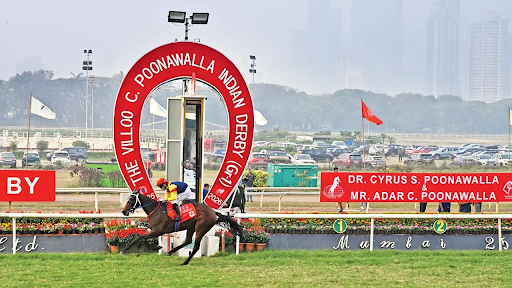
Thoroughbred horses racing at Mahalaxmi Racecourse during the ₹4 Crore Villoo C. Poonawalla Indian Derby with packed grandstands in the background.
others

Mahalaxmi Set for a ₹4 Crore: Villoo C. Poonawalla Indian Derby

Still, the most illustrious event in Indian horse racing is the Villoo C. Poonawalla Indian Derby. The event offers a ₹4 crore purse reward this year. Mumbai has thus become the focus of racing circuit interest. The Mahalaxmi Racecourse prepares for a packed February 1 fixture. Moreover, this edition promises elite competition and heightened anticipation. Every racing season builds toward this single afternoon. Owners invest years planning for this moment. Trainers structure conditioning schedules around Derby timing. Meanwhile, jockeys fine tune pace judgment for the demanding distance. Therefore, the Derby represents a preparation that meets an opportunity. Why the Indian Derby Holds Supreme Status The Villoo C. Poonawalla Indian Derby holds a Group 1 classification in India. That position mirrors the highest level of competition in local racing. The 2400 meter race indeed calls for discipline and stamina. Since just three-year-olds compete, potential meets unpredictability. Consequently, tactical execution often decides the final outcome. Unlike sprint races, this contest rewards patience. Early speed can backfire on the extended trip. Instead, jockeys conserve energy for the final stretch. In contrast, poorly timed acceleration often leads to fading late. The balance between restraint and aggression defines winners here. Mahalaxmi’s layout adds another dimension. The sweeping turns test positioning throughout the race. Similarly, track familiarity influences split second decisions. Notably, even minor misjudgments magnify over 2400 meters. ₹4 Crore Prize Purse Changes the Equation The ₹4 crore prize purse raises the race’s financial significance. In fact, it strengthens Derby’s position within Asian racing circuits. Owners now see stronger economic returns for elite breeding programs. Therefore, the best bloodlines target this fixture deliberately. A purse of this scale affects multiple layers: Breeding value increases for winners and strong finishers Trainers secure long term credibility Jockeys elevate their national ranking Stud farms gain future demand Additionally, the purse intensifies competitive preparation. Stables leave little to chance. Fitness programs become more precise. As a result, margins between contenders narrow considerably. Contenders, Conditioning, and Race Strategy The final field usually features proven performers from preparatory classics. These contenders earn entry through consistent performances. Meanwhile, leading trainers analyse sectional timings closely. Conditioning focuses on stamina building rather than pure speed. Race strategy often unfolds in three phases: Settling early without overexertion Maintaining rhythm through the middle stages Timing the final surge precisely Because the distance stretches beyond typical races. Hence, patience remains critical. However, waiting too long can close winning windows. Jockeys must read pace shifts instinctively. Consequently, experience often proves decisive. Historically, leading stables dominate through disciplined planning. Repeated participation strengthens tactical familiarity. Similarly, seasoned jockeys understand Mahalaxmi’s subtle gradients. That awareness influences when they press forward. Beyond Racing: A Social and Cultural Spectacle The Villoo C. Poonawalla Indian Derby extends beyond athletic competition. It functions as Mumbai’s major social and sporting event. The grandstands fill with racing enthusiasts and high profile attendees. At the same time, fashion and custom also blend in naturally. Typically included on race day are: Multiple supporting races Hospitality enclosures Fashion showcases Award celebrations Furthermore, the event strengthens Mahalaxmi’s historical identity. The Arabian Sea background elevates its special character. First-time fans, racing professionals, and families all have the same energy. The Derby becomes a full day event overall. Heritage and Long Run Impact Every Villoo C. Poonawalla Indian Derby contributes to Indian racing’s past. Often, victorious horses affect the next breeding cycles. Their heritage, hence, extends beyond a single day. Trainers base their careers on Derby triumphs. Here, jockeys gain permanent accolades via performance. Recent issues have shown meticulous preparation and tight results. Each year, the competitive depth increases. Consequently, the Derby’s reputation grows annually. First of all, it keeps Indian racing’s gold standard. Why Villoo? C. Poonawalla Indian Derby Issues Indian horse racing’s peak is the Villoo C. Poonawalla Indian Derby. Its ₹4 crore purse suggests aspiration and status. The 2400-meter obstacle tries patience, nerve, and stamina. Consequently, victory here defines careers and bloodlines. As February approaches, anticipation builds steadily at Mahalaxmi. Trainers finalise plans. Jockeys visualise race flow. Racing enthusiasts prepare for a defining afternoon. If you follow Indian horse racing closely, this is the race worth watching and understanding in depth.
others

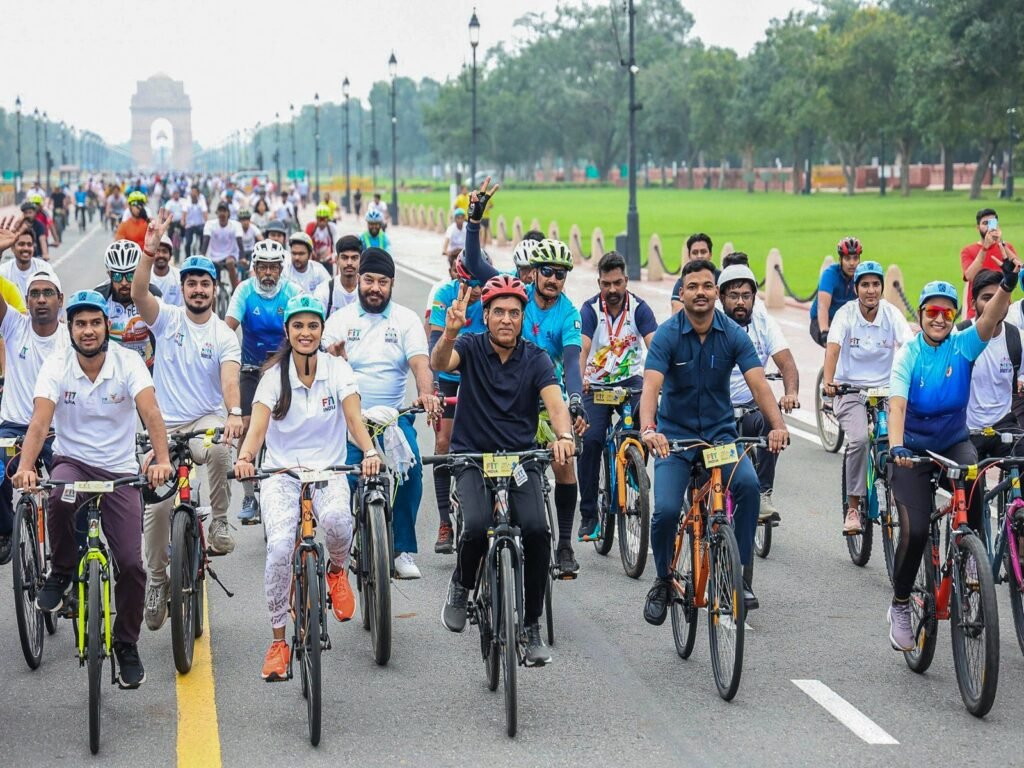
58th Fit India Sundays on Cycle 2026 Over 22 Lakh Participants Across India

Sunday morning light touched beyond twenty-two hundred thousand riders during the fifty-eighth round of Fit India’s cycling push. From village lanes to crowded city streets, people rolled forward on bikes, drawn by wellness and community spirit. At the Attari-Wagah crossing, loud with cheers, bicyclists moved in rhythm with soldiers, runners, and young athletes. Even those voting for the very first time. Bodies in motion told a story bigger than exercise: one about belonging, participation, and informed choices. Each pedal stroke helped shape a country learning to move together and become wiser. The eventful day left tracks that others will follow. Pedalling Patriotism at the Attari-Wagah Border Morning light touched the Attari stretch. Turning it into the centrepiece of Cycle 2026’s 58th Fit India Sunday. Against the edge of the international boundary. Wheels turned with a slow pulse of pride and shared purpose. Ranks of soldiers moved in step with young helpers. Riders from every kind of background blend without effort. The presence grew stronger when Shri Mansukh Mandaviya, Union Minister for Youth Affairs and Sports, arrived. Besides this, Minister of State Smt. Raksha N Khadse showed up, which made things matter more. When they joined in, it turned out to be a community mission. First up. New voters showed up in big numbers. That gave things a fresh spark. Take how workouts are mixed with voting reminders: body health meets civic habit. So instead of just moving their legs on bikes, people moved through the act of showing up, too. Picture it: rows of riders turning pedals at once, each one part sweat, part solidarity. Turns out, when motion and mission match, attention follows from cities nearby and even places far off. That year’s version stood out. Nationwide Involvement: 58th Fit India Sunday Attari-Wagah stood out, as more than 200,000 spots nationwide held bike rides at once. School kids pedalled alongside older adults. Certainly, linked by goals around health and community. The city workers and coaches, together, assisted route operations with conformity to regulations. The effort succeeded because 2.2 million riders took part. Further, demonstrated how far the idea had spread. It turned into a moment showing that big efforts can pull diverse groups together. Additionally, pushing better habits along the way. People started seeing bike rides as more than workouts; they became shared moments of joy. Still, some regions leaned into creativity, hosting story-based routes. Friendly races and outreach efforts even pulled neighbours together. What stood out was how young people signed up to vote while riding. This event linked health with real-world responsibility. In fact, attendance climbed past earlier years, showing it wasn’t just another annual thing but something deeper had taken hold. From city corners to backcountry paths, each turn of a wheel added momentum to an unmatched wave of public spirit. Fitness Community: 58th Fit India Sunday On the 58th Fit India Sunday ride in 2026, cycling became a quiet act of public spirit. Ministers spoke, but their words tied body strength to civic duty without grand claims. Take Mandaviya, he called it a “people’s wave,” shaped by ordinary effort over time. Then Raksha Khadse turned to youth, linking daily runs with showing up at polling stations. So movement of legs met movement of democracy, each feeding the other. Health wasn’t just tracked in steps. It showed up in engaged citizens pedalling through city streets. Moving forward on bikes next to troops and neighbours gave people real motivation up close. Moreover, blending voting knowledge into the workout moment built an unspoken link. Personal effort tied to country commitment. As it turned out, the youth left feeling accountable. And a bit stronger inside. Towns felt how physical energy, love for the nation, and active citizenship together could move as one rhythm. For this reason. What began as motion became something deeper. A unified heartbeat of togetherness, driven by quiet meaning. Impact and Participation Huge numbers, more than 22 lakh, took part, showing how far the 58th Fit India Sunday ride has come. Picture after picture showed crowds moving together on bikes. Certainly, a quiet proof of commitment and shared spirit. Behind the scenes, ground teams laid out the rules and routes, so riders could stay on board. Because of that balance, the day did two things at once. At Attari-Wagah, soldiers marched beside young faces. Some voted for the first time. Indeed, tied together by grit and routine effort. Across towns and villages, people joined. Likewise, pulled by purpose, turning wellness drives into something larger. When bikes rolled out for the 58th Fit India Sunday. It wasn’t only about motion; it echoed what unity can do. Responsible India: Pedalling Toward a Healthier Held across countless towns. The 58th Fit India Sundays on Cycle 2026 turned pedaling into something larger. Less about sport, more about shared purpose. While bicycles moved bodies forward, they also carried ideas. That wellness isn’t solitary but woven into community life. With more than 22 lakh people joining rides, cities pulsed in rhythm. Furthermore, showing how public energy shapes national habits. Because movement brought crowds together. So did the conversation on staying active and on being responsible. As a result, this moment sparked quiet shifts. Eventually, it became noticeable among groups who now see health and duty as linked. 
others

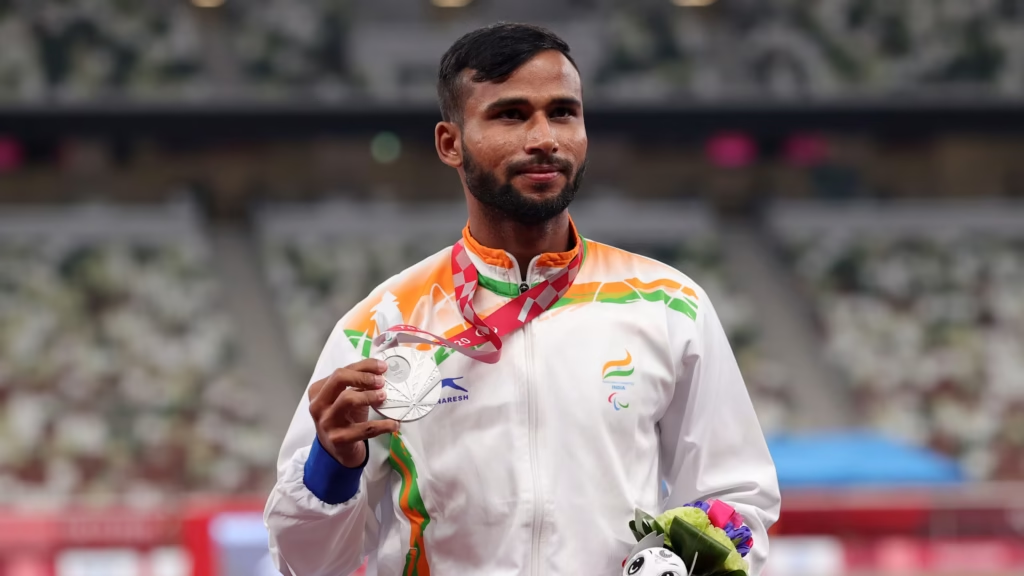
Praveen Kumar Wins Padma Shri for Para Athletics at Age 23

Praveen Kumar (23) now is awarded with the Padma Shri distinction. Also, this latest recognition follows two earlier major sports awards. A rare sequence, almost unheard of in Indian para athletics. Life threw hurdles his way, yet he jumped higher each time. He began his career on unpaved paths while remaining outside public attention. His name now travels through both stadiums and remote rural areas. Because persistence shaped what talent began. A cheer rose through Govindgarh village, Jewar, carried on shared joy. Folks came together, drawn by one boy’s moment under the national light. His achievements extend beyond the collection of awards. True, his journey maps out hope for youth chasing sport dreams. Especially those in para athletics. A Historic Hat Trick of Honours Faster than most, Praveen climbed the para athletics ladder. His talent opened doors few even see. That first global win took place after claiming silver in the men’s high jump. (2021, Tokyo Olympics). The T64 category silver medal achievement created that specific moment. Gold came his way after clearing 2.08 metres, indeed a personal peak. That leap? It placed him among the elite. Not just a win, but a statement seen round the globe. A top honour in 2021, then the highest years later, proved greatness. National pride grew around his name. He showed on the field turned into something bigger than medals. Clearing two metres in New Delhi brought a bronze at the 2025 World Championships. That mark became his best that season. Another piece now fits into his growing success.  However, his performance record shows proof of his ability to maintain excellence through precise implementation. Champion’s Approach Prize wins push him forward, yet bring heavier expectations, says Praveen. Far from an endpoint, medals feel more like sparks lighting sharper aims ahead. Eyes set on 2.1 m, an Asian benchmark, with whispers of 2.11 m tugging at the edges. Each day unfolds across seven or eight hours shaped by relentless drills. Chasing greatness keeps his mind locked on holding onto gold when Los Angeles hosts in 2028. Starting out in Govindgarh, Jewar, on dusty patches and classroom yards shaped where Praveen first played. School volleyball nets saw him go up against others without limits. Toughness showed itself young through those matches. Then came 2016; a gathering for runners and jumpers changed everything at once. High jump stood out that day. His path shifted completely after one leap. Come 2018, training under Satyapral Singh shifted everything. After that, relocating to Delhi by 2023 pushed him forward. True, the village tugs at him now and then. In time, loyalty like his turns quiet roots into global reach. Guiding Light: Young Para Athletes Out of all things, Praveen stepped into mentoring like it was meant to be. Young para athletes from different corners of India now walk paths he helped clear. Instead, they find their way into training, backed by aid straight from government plans. Because of him, something bigger started moving through communities. Confidence grew, yes. But so did smart choices, serious effort, and even quiet belief in long term goals. He speaks softly. Should his story move even one person to begin, then effort finds meaning. With the Padma Shri comes an influence that stretches past finish lines. Now others see paths where there was only pavement before. His win feels like their own victory to people in Jewar. A sense of shared pride spreads through the village streets. Not just one man’s climb, but everyone’s lift. A mentor steps in, showing younger para athletes how routines build strength. Further, pathways open when guidance is steady. Training takes shape under watchful support, doors creaking wider through trusted advice. The Importance of the Padma Shri Giving Praveen Kumar the Padma Shri means something deeper than just one person’s success. His skill stands out, yet it also points to how para sports are finally being seen more clearly across India. Young athletes who face physical challenges might see this moment and feel a quiet shift. Likewise, doors once shut are now creaking open. Recognition like this doesn’t shout, but it echoes. Still, there’s more to it; it shows how sports sometimes shift culture. Honouring Praveen means seeing past pain, spotting where things began to bend. Continuing the Journey Still celebrating, yet Praveen keeps his eyes ahead. Not chasing trophies alone, he aims further than individual glory. Driven by something deeper, goals turn into milestones. With each achievement, hope grows quietly among young para athletes looking up to him. Starts with a small town, ends up getting seen by a nation. Skill matters, yes, but so does steady effort, plus help from those around you. From Jewar he came, and now he holds a Padma Shri. Jumping high? That part is obvious. What counts more is setting a new standard that others follow. Far from an ending, the Padma Shri marks just the beginning of more to come. Across fields and tracks, young athletes find quiet strength in his journey.
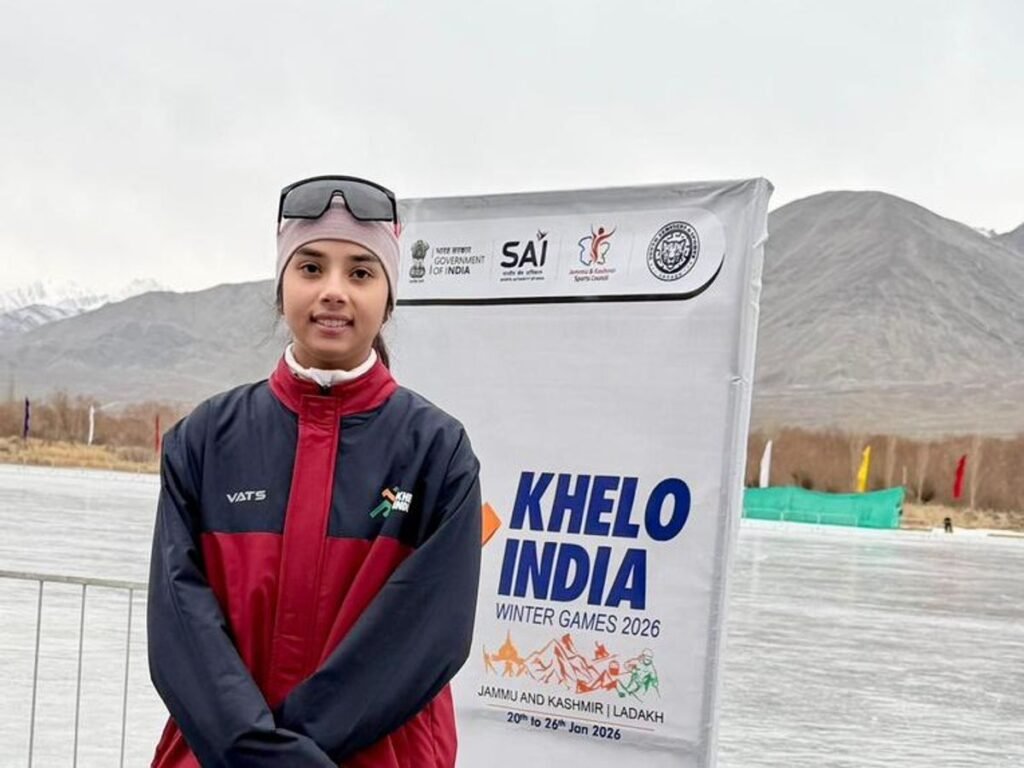
Udreka Singh competing in the women’s 500m speed skating event at the Khelo India Winter Games 2026 in Leh-Ladakh.
others

Teenage Star Ice Skater Udreka Singh: Khelo India Winter Games 2026

Udreka Singh claimed the top spot among young women racing across ice at the Khelo India Winter Games 2026. Her name lit up headlines when she blazed past records, setting a pace never seen before from any female skater that age. In the cold silence of Leh-Ladakh’s icy track, one teenager shifted everything with a single run. Speed carried her forward, focus held every stride, as time folded behind her finish. Frost bites at the air above Gupukh’s Pond, just beside the Indus River, where thin skies bring brutal cold. Though the wind cut sharply across the ice, Udreka Singh stayed steady from start to finish. Her blades sliced through the course, women’s 500m, and stopped the clock at 53.94, a mark never seen before. Her time performance secured her victory in the competition. It also earned her national recognition as India’s fastest female ice skater. Udreka Singh Odyssey: A Gold Medal Earned  Udreka Singh entered the race with limited experience on long-track equipment. She competed using long-track boots and blades for the first time in competition. Even so, her transitions stayed smooth and confident across every lap. Each stride reflected hours of discipline rather than nervous energy. The result surprised many watching trackside. Local skaters from Ladakh traditionally dominate winter events due to climate familiarity. However, Udreka outpaced seasoned competitors with a consistent rhythm. She finished ahead of Skarma Tsultim and Tasnia Shameem, both strong contenders. The margin spoke volumes about her preparation and adaptability. This victory did not rely on chance or conditions. Her timing showed efficiency rather than brute force. She held her line cleanly and avoided unnecessary movement. As a result, speed stayed steady across the entire distance. The performance hinted at long-term potential, not just a single triumph. Progress: Built through Patience and Persistence A fresh start shaped Udrika Singh long before she reached Leh-Ladakh. Three times by 2026, she stood on the snow-packed fields of the Khelo India Winter Games. Each season added layers to her understanding of competitive skating. This gold medal became the natural outcome of that progression. Hailing from the Satna district in Madhya Pradesh, Udreka represents a non-traditional winter sports region. Because of this, her success carries added significance. It shows how talent can rise beyond geographic expectations. Access to structured platforms allowed her skills to surface nationally. Her growth also reflects adaptability. She moved between different skating styles with complete ease. A Milestone Moment: Women Winter Sports India Udreka Singh, the fastest female ice skater, resonates beyond one medal. It signals a shift in how winter sports develop across India. Lately, national platforms have expanded access and visibility. Athletes now receive exposure regardless of regional climate advantages. Victory sparked joy across Madhya Pradesh. Her achievement, noted by state authorities, stood for persistence more than luck. This achievement also strengthens the case for sustained investment. Ice skating requires both specialised facilities and professional instructors, together with time and dedication from athletes. When support aligns, talent responds with results. Udreka’s performance validates long-term development models. Women Athletes: Shaping a Broader Sporting Future Udreka Singh’s gold adds momentum to women’s participation in emerging sports. Across disciplines, young athletes now step into spaces once considered limited. Her calm presence and focused execution set a strong example. Success stories like hers reshape perceptions naturally. When achievements gain attention, pathways feel more tangible to aspiring athletes. Udreka’s journey will likely encourage participation across schools and academies. Her age further strengthens that impact. Her win also highlights discipline behind the scenes. Moreover, her technique for achieving results from her efforts to create short-term results demonstrates her dedication to her work. The sustainable growth of competitive sports requires this particular mindset to function effectively. Beyond Medals: Why this Victory Matters  Every national milestone carries layers of meaning. In this case, the impact stretches across regions and age groups. Udreka Singh showed that preparation bridges experience gaps effectively. She proved adaptability matters as much as familiarity. Her performance also reinforces the role of national competitions. Events like the Khelo India Winter Games create visibility and structure. Through these platforms, athletes gain exposure and belief. Momentum builds when opportunity meets readiness. For Indian winter sports, this win adds credibility. Gradually, performances like this shape international ambition. Development begins with consistency, not overnight leaps. Udreka’s journey aligns perfectly with that philosophy. In conclusion, This accomplishment extends beyond individual success. It strengthens India’s winter sports narrative and inspires future athletes nationwide. Those following emerging sporting journeys will find her path worth watching closely.
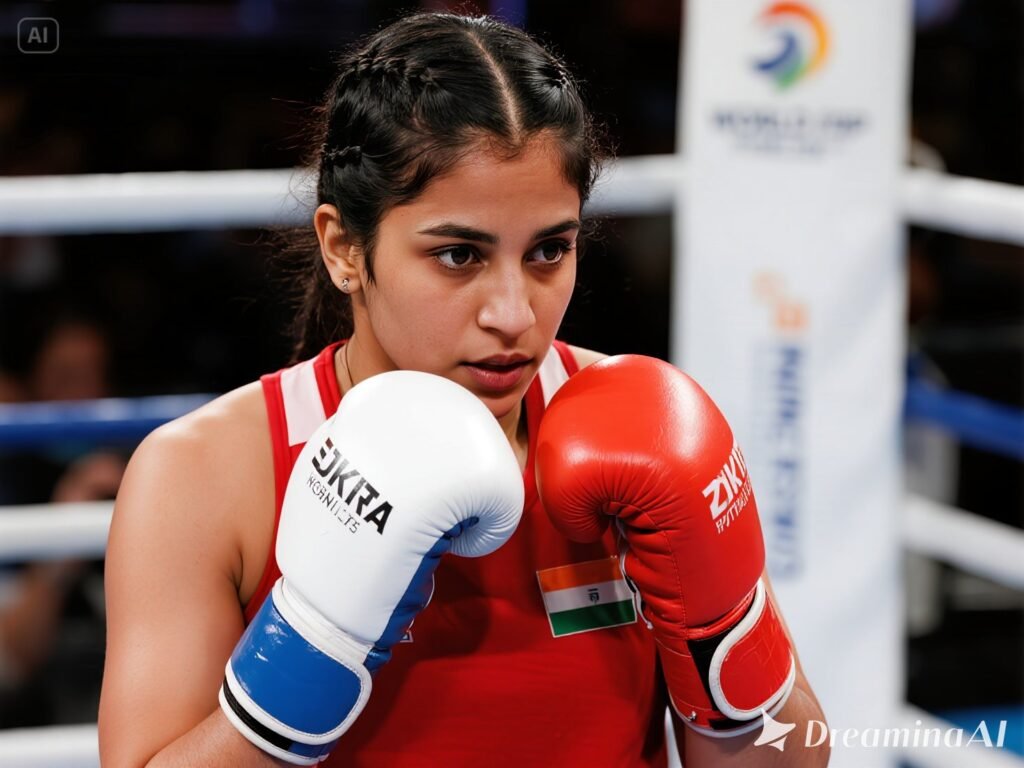
Nikhat Zareen celebrating her victory after winning gold at the 2025 World Boxing Cup, showcasing a powerful comeback in the ring.
others

Nikhat Zareen Roars Back: A Golden Comeback At The World Boxing Cup 2025

Indian boxing talent Nikhat Zareen has once again demonstrated her supremacy as the women’s 51 kg category’s ruling fighter. At the World Cup Finals 2025 in boxing, she got a brilliant gold medal, her fifth world-level gold and also a comeback after the tragic Paris Olympic situation. Besides winning, she made a resounding statement of her qualities: resilience, confidence, and a champion’s spirit. Nikhat Zareen’s World Boxing Cup 2025 Triumph A controlled, confident, and technically sharp performance was exhibited by Nikhat in the finals of the World Boxing Cup. She seemed to be totally in control of the game for the entire tournament, particularly during the final where she outclassed Xuan Yi Guo of Chinese Taipei by a lopsided 5–0 unanimous decision. At that moment, this success could not have been more timely. Many were left questioning the duration of her recovery after her early exit from the Paris Olympics. Rather than allowing the situation to slow her down, she took the opportunity to rebuild her entire being, both mentally and physically. This gold medal is a testament to her incredible transformation since Paris, as she has become more composed, clever, and even more resolute in her ring battles. How She Reached The Finals  Nikhat’s journey to the top of the podium was characterized by discipline and skill. In the semifinals, she outperformed Uzbekistan’s Ganieva Gulsevar, landing clean punches while at the same time fully controlling distance and timing. Her skillful counters and footwork put her in the lead with every judge. She took the same self-assuredness into the final, winning without giving her rival even a single round. Putting Paris Olympic Behind Lessons From A Difficult Olympic Run  Nikhat’s exit from the 2024 Paris Olympics was an unfortunate incident. She was defeated by Wu Yu from China, who eventually got the Olympic gold medal. It was a very difficult defeat for Nikhat, who had already set high expectations from her Olympic participation. However, she did not allow the defeat to control her life. On the contrary, she considered it a challenge. She did a lot of practicing for her technique, speed, and overall ring movement. She has also quite frankly stated that the loss helped her to become more mentally strong and also more conscious of her areas of improvement. A Fresh Star After Nearly 20 Medal Less Months  This triumph, interestingly, follows a pretty long hiatus of nearly 20 months without a significant medal which is very much capable of breaking the spirit of most athletes. But Nikhat made the best use of this period by working harder on her training, polishing her skills, and keeping her eyes on the prize. The fact that she was crowned with this gold medal in her hometown of Greater Noida just added to the significance of the moment for her. A Golden For Indian Women In Boxing Nikhat wasn’t the only Indian boxer that was bright at the event. The Indian women’s team had an awesome run and got medals in different weight categories. Their success was a proof of the blooming country’s power in women’s boxing. Other Indian Gold Medal Winners  India brought home a total of five gold medals in the women’s section, which include: Minakshi Hooda (48 kg) Preeti Pawar (54 kg) Arundhati Choudhary (70 kg) Nupur Sheoran (+80 kg) Nikhat Zareen (51 kg) Their joint efforts made the tournament an event of Indian boxing quality in the limelight. Why This Win Matter So Much For Nikhat Zareen  For Nikhat, this gold medal stands for many things: A success story after the disillusionment of Paris A revival to the level of winning medals after a long break A signal of her being still one of the most formidable rivals in her class A confidence boost for the international competitions that are to come She labeled the win as “surreal”, chiefly because it was in front of her home crowd. Fans, coaches, and her team support made the moment emotional and unforgettable. Nikhat Zareen’s Training Evolution: What Changed?  Focus on Speed and Footwork Significantly, Nikhat altered her training regimen for the World Boxing Cup. She worked out in different weight divisions to boost her quickness and agility. This tactic was successful — her timing seemed very precise, her footwork was more than before, and her awareness in the ring was much better than overhead. Stronger Mental Discipline Eventually after the Olympics, she continued to improve on her mental stability during games. Her mental maturity was displayed in the finals when, despite the match playing out with high physical intensity, she remained tranquil.  Looking Ahead: What’s Next For The Champion  Nikhat’s win is probably the turning point in her career. Along with the confidence boost, she is getting ready for the Asian Championships and other international tournaments coming her way. Her ambition is not only to grab medals, but also to grow, motivate young boxers, and keep her position as one of the best sportswomen in India. The gold she earned at the World Boxing Cup Finals 2025 is a testimony that the defeat of champions is not the end, they just come back — even stronger, wiser, and more dedicated. If you are interested in such kind of motivational news and wins, then Kheloexch is the best place to start. Visit the platform and explore more. 

Scroll to Top