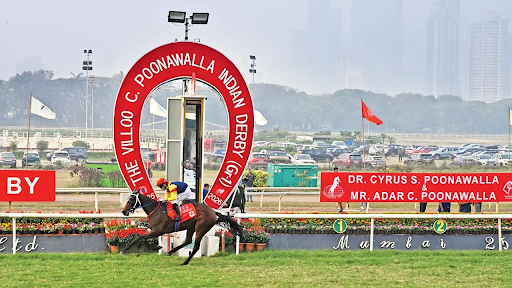
Still, the most illustrious event in Indian horse racing is the Villoo C. Poonawalla Indian Derby. The event offers a ₹4 crore purse reward this year. Mumbai has thus become the focus of racing circuit interest. The Mahalaxmi Racecourse prepares for a packed February 1 fixture. Moreover, this edition promises elite competition and heightened anticipation.
Every racing season builds toward this single afternoon. Owners invest years planning for this moment. Trainers structure conditioning schedules around Derby timing. Meanwhile, jockeys fine tune pace judgment for the demanding distance. Therefore, the Derby represents a preparation that meets an opportunity.
Why the Indian Derby Holds Supreme Status
The Villoo C. Poonawalla Indian Derby holds a Group 1 classification in India. That position mirrors the highest level of competition in local racing. The 2400 meter race indeed calls for discipline and stamina. Since just three-year-olds compete, potential meets unpredictability. Consequently, tactical execution often decides the final outcome.
Unlike sprint races, this contest rewards patience. Early speed can backfire on the extended trip. Instead, jockeys conserve energy for the final stretch. In contrast, poorly timed acceleration often leads to fading late. The balance between restraint and aggression defines winners here.
Mahalaxmi’s layout adds another dimension. The sweeping turns test positioning throughout the race. Similarly, track familiarity influences split second decisions. Notably, even minor misjudgments magnify over 2400 meters.
₹4 Crore Prize Purse Changes the Equation
The ₹4 crore prize purse raises the race’s financial significance. In fact, it strengthens Derby’s position within Asian racing circuits. Owners now see stronger economic returns for elite breeding programs. Therefore, the best bloodlines target this fixture deliberately.
A purse of this scale affects multiple layers:
- Breeding value increases for winners and strong finishers
- Trainers secure long term credibility
- Jockeys elevate their national ranking
- Stud farms gain future demand
Additionally, the purse intensifies competitive preparation. Stables leave little to chance. Fitness programs become more precise. As a result, margins between contenders narrow considerably.
Contenders, Conditioning, and Race Strategy
The final field usually features proven performers from preparatory classics. These contenders earn entry through consistent performances. Meanwhile, leading trainers analyse sectional timings closely. Conditioning focuses on stamina building rather than pure speed.
Race strategy often unfolds in three phases:
- Settling early without overexertion
- Maintaining rhythm through the middle stages
- Timing the final surge precisely
Because the distance stretches beyond typical races. Hence, patience remains critical. However, waiting too long can close winning windows. Jockeys must read pace shifts instinctively. Consequently, experience often proves decisive.
Historically, leading stables dominate through disciplined planning. Repeated participation strengthens tactical familiarity. Similarly, seasoned jockeys understand Mahalaxmi’s subtle gradients. That awareness influences when they press forward.
Beyond Racing: A Social and Cultural Spectacle
The Villoo C. Poonawalla Indian Derby extends beyond athletic competition. It functions as Mumbai’s major social and sporting event. The grandstands fill with racing enthusiasts and high profile attendees. At the same time, fashion and custom also blend in naturally.
Typically included on race day are:
- Multiple supporting races
- Hospitality enclosures
- Fashion showcases
- Award celebrations
Furthermore, the event strengthens Mahalaxmi’s historical identity. The Arabian Sea background elevates its special character. First-time fans, racing professionals, and families all have the same energy. The Derby becomes a full day event overall.
Heritage and Long Run Impact
Every Villoo C. Poonawalla Indian Derby contributes to Indian racing’s past. Often, victorious horses affect the next breeding cycles. Their heritage, hence, extends beyond a single day. Trainers base their careers on Derby triumphs. Here, jockeys gain permanent accolades via performance.
Recent issues have shown meticulous preparation and tight results. Each year, the competitive depth increases. Consequently, the Derby’s reputation grows annually. First of all, it keeps Indian racing’s gold standard.
Why Villoo? C. Poonawalla Indian Derby Issues
Indian horse racing’s peak is the Villoo C. Poonawalla Indian Derby. Its ₹4 crore purse suggests aspiration and status. The 2400-meter obstacle tries patience, nerve, and stamina. Consequently, victory here defines careers and bloodlines.
As February approaches, anticipation builds steadily at Mahalaxmi. Trainers finalise plans. Jockeys visualise race flow. Racing enthusiasts prepare for a defining afternoon. If you follow Indian horse racing closely, this is the race worth watching and understanding in depth.