Tennis

Tennis

Aryna Sabalenka reaches Wuhan Open semifinals, extends 20-match streak

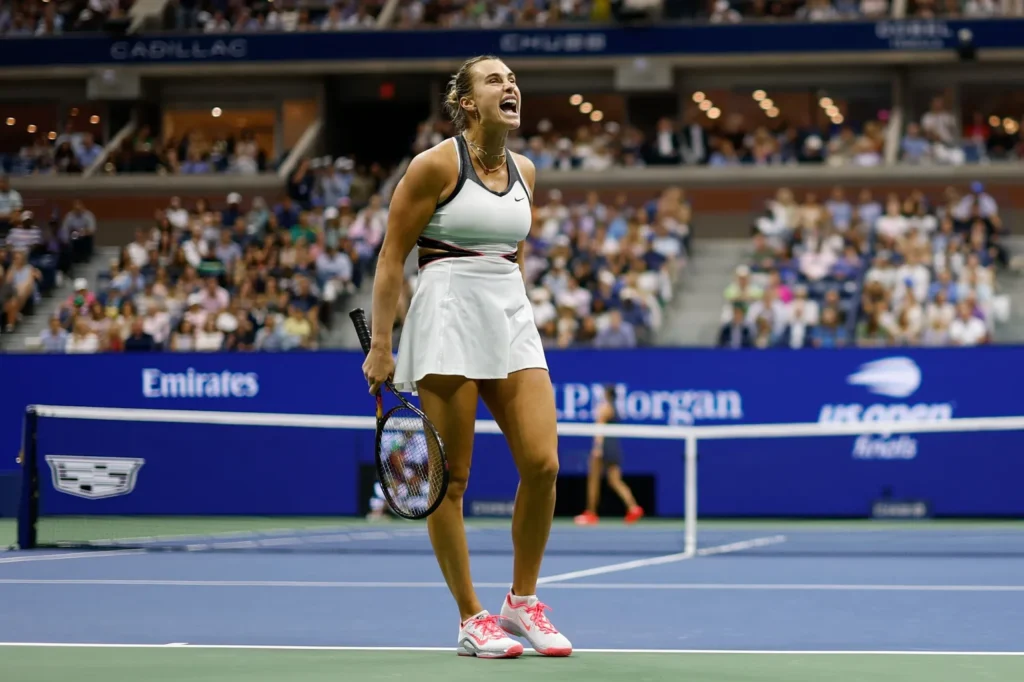
Aryna Sabalenka continues to affirm her supremacy in Wuhan. The number one athlete in the world has expanded her record at the tournament to an impressive 20 victories in a row after she posted a 6-3, 6-3 win over Elena Rybakina on Friday.  Only two wins now separate her from claiming a fourth successive title at this Chinese location.  No Hardships at All  The entire encounter took only 85 minutes. Throughout the match, Sabalenka was in such dominance that she broke Rybakina’s serve thrice and did not lose her own even once. After she was declared the victor, Sabalenka proceeded to the net, greeted the audience with a wave, and directed kisses to her fan club that had seen her conquer this tournament for years.  This was not just another win in Sabalenka’s list of victories. It was also a milestone in the sense that it was the first time she had ever beaten Rybakina without needing to fight through the full three sets. All the previous encounters among the two had ended with the athletes walking the same distance, but this time around, the US Open winner made it look easy. Making History One Match at a Time Sabalenka’s 20-match streak puts her in rare company. She’s become just the fourth woman to rack up 20 straight main draw victories at a single WTA tournament since 2000. The others who pulled this off were Monica Seles at the Australian Open with 33 victories, Steffi Graf at a tournament with 25, and Caroline Wozniacki in New Haven with 20.​ The Belarusian has owned Wuhan since her first appearance there. Her track record shows victories in: 2018 championship 2019 championship 2024 championship after the tournament returned from a break 20 straight matches without a single loss​ Kheloexch followers and tennis fans worldwide have watched her turn this tournament into her personal playground. Every time she steps on these courts, opponents know they’re facing an uphill battle.​ What Makes Wuhan So Special There’s something about this Chinese city that makes Sabalenka’s contest look like pure gold. Since 2018, when she first came here, she has never lost a match. The 27-year-old athlete with an active streak of nine consecutive match wins in all tournaments after winning her US Open title last month.​ Her numbers this year characterize her totally. In the year 2025 alone, she has made it to the semifinals 11 times. This kind of persistence is what separates the good from the great athletes. Definitely, Sabalenka is one of them and she surely belongs to the great ones.​ Next Challenge Ahead Jessica Pegula awaits in the semifinals after her hard-fought three-set win over Katerina Siniakova. The American had to come back after losing the first set, but she eventually won 2-6, 6-0, 6-3. This is her seventh consecutive match where she needed three sets to finish off her opponent.​ The statistics heavily tilt in Sabalenka’s favor for this particular matchup. Eight out of their ten previous encounters have gone in her favor. Over the last two years, she has swept Pegula aside four times. But as anyone who follows tennis via Kheloexch knows, previous results are no assurance for the next ones. The Bigger Picture Arkady hath taken in this season’s times. Apart from throwing her dominance in Wuhan, she has gained four grand prizes in her account, which among them two successive wins in the Australian Open in 2023 and 2024, then two successive victories in the US Open in 2024 and 2025. Over the years she has continually pocketed $29 million of which she is currently the number one ranked athlete in the world.  She has a great powerful serve which gives her a lot of advantages. This season she has an average of 3.6 aces per match. To make the situation worse for her competitors, she also has very strong groundstrokes, and therefore once she gets into her rhythm, her opponents find it very hard to cope with her. The Path Leading to Four Titles in a Row Only two wins are all that Sabalenka needs in order to make a rare occurrence of four titles won in a row at the same tournament. Very few athletes have reached this level competing at the WTA 1000 for longer than one tournament, thus it is not only the case that Sabalenka’s name will be remembered in Wuhan but also by winning one more time her position in the place will be completely unrivaled.  The match against Pegula in the semifinals will be the toughest challenge she has to pass. Next, she might face either Jasmine Paolini or Coco Gauff in the final, the latter easily defeating Laura Siegemund by 6-3, 6-0 to secure her place in the last four. Moreover, Paolini has surprisingly beaten the world No. 2, Iga Swiatek, with a score of 6-1, 6-2 and thus is through to the semis. Why This Streak Matters Twenty straight victories at one tournament doesn’t happen by accident. It takes mental strength, physical fitness, and the right mindset every single time you walk on the court. Sabalenka has shown all three qualities in Wuhan over the years.​ Her record here stands at a perfect 20-0 in the main draw. That’s the kind of stat that defines careers and creates legends. She’s turned Wuhan into her fortress, a place where opponents arrive already half-beaten before the first ball gets hit.​ The pressure keeps building with each match, but Sabalenka keeps delivering. That’s what champions do.​

Tennis

Unseeded Rinderknech Ousts Auger-Aliassime To Reach Shanghai Semifinals

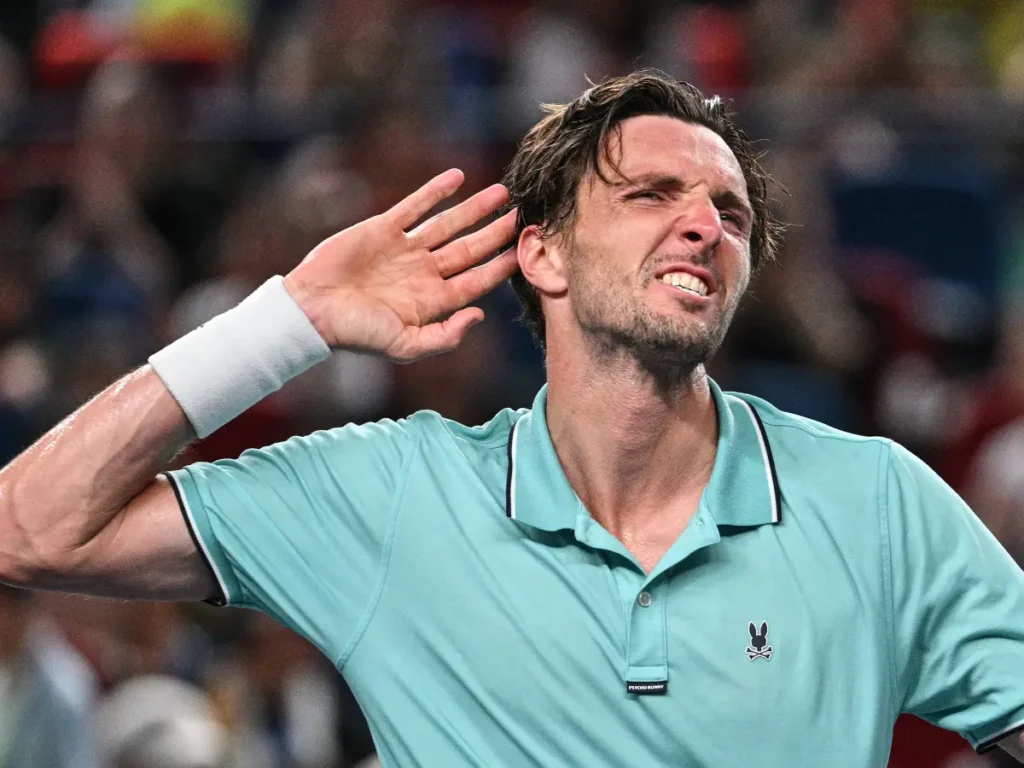
Arthur Rinderknech has just taken an unbelievable turn! The French tennis athlete, who entered the event without a seed, conquered Canadian Felix Auger-Aliassime in the Shanghai Masters by a score of 6-3, 6-4 and it took him only 87 minutes to get the job done. This victory was a turning point for Rinderknech as he advanced to the Masters 1000 semifinal for the first time in his career. Auger-Aliassime was the underdog with a 13th world ranking before this match. He had been great throughout the tournament, losing only one service game before his encounter with Rinderknech. But the atmosphere on the court turned so quickly as though no one had expected it. How Rinderknech Got the Job Done The 30-year-old Frenchman performed smart, aggressive tennis from start to finish. Here’s what made the difference:​ Rinderknech converted both break points he got, taking one in each set​ He defended all three break points against him, which kept Auger-Aliassime from finding any rhythm​ His first serve was on fire — he claimed 85 percent of those points​ The Frenchman only dropped 12 points on his entire serve during the match​ That first set unfolded like a movie and showed everyone what was about to come. Rinderknech had hit nine clean fantasies that were just out of the reach of his opponent and he made only three errors. Auger-Aliassime had command over the game having a 40-15 lead in the sixth game, but at that very moment, everything collapsed. He made a double fault, then he made some errors with his forehand and suddenly Rinderknech had a break point. The Frenchman evenly hit a forehand pass right along the line to seize the break. The Second Set Sealed the Deal Rinderknech made an immediate impact in the second set. He won Auger-Aliassime’s service in the first game itself thereby gaining an early advantage. The Canadian was given one actual opportunity to get back into the match when he went up 40-0 in the fourth game. These were his initial break points of the day. But this was the point where it started becoming hard for Auger-Aliassime. He failed three times consecutively with his forehand, while two were on his returns and he couldn’t take the advantage. After this incidence, Rinderknech tightened up his game. The Frenchman won 17 out of his next 18 service points from that 40-0 deficit. Auger-Aliassime was never granted another opportunity. For those who keep track of tennis matches online, sites like Kheloexch have been closely monitoring this tournament, and the result has caught everyone’s attention. The underdog victory only made the already remarkable week in Shanghai more memorable. The Bigger Picture It wasn’t merely the case of one match. Rinderknech had already, prior to this, eliminated the world’s number three Alexander Zverev, and the 19th ranked Jiri Lehecka. One might say he had actually defeated three top-20 athletes in a row, and this does not seem bad at all considering that he was coming from the 54th rank when the tournament began.​ The Frenchman’s victory put him at the 37th position in the live ranking, thus he was getting closer and closer to a career-high rank. He was only the third Frenchman ever to make it to the semis in Shanghai, alongside Jo-Wilfried Tsonga and Gilles Simon. Medvedev was going to be his opponent next.​ Additionally, there is an interesting family anecdote involved here. Rinderknech’s cousin, Valentin Vacherot, reached the semi-finals as well. After Rinderknech had cracked the serving barrier to get to 6-3, he pointed directly to Vacherot, who was in his box. The two cousins were experiencing their best tournament ever together.​ What Went Wrong for Auger-Aliassime The Canadian athlete was at a loss for ways to score points when it really mattered. He put down three double faults, all in the first set, which surely didn’t help his case. He did, however, get to hit eight aces, but still only got 64 percent of his first-serve points while Rinderknech got 83 percent.​ Auger-Aliassime entered this game 2-0 against Rinderknech, having prevailed over him already twice in 2025. That history was of no importance in this match. When one fails to capitalize on the opportunities created and the other continually benefits from the errors, the score tells the tale.​ For those who were following the match on Kheloexch and similar channels, it was one of the most discussed results of the tournament. Rinderknech’s exit indicated that rankings do not always reflect the actual situation. He delivered his best tennis at the most critical moment and did not allow the occasion to overwhelm him.​ The Frenchman remained calm throughout the game but expressed his feelings afterwards. He lifted his arms in triumph and gazed at his cousin who would be competing against Novak Djokovic the next day. The entire family back in their hometown was watching, and Rinderknech said they were all in their own bubble after what he and his cousin had done together.​

Tennis

Coco Gauff Beats Jessica Pegula To Win Wuhan Open Final

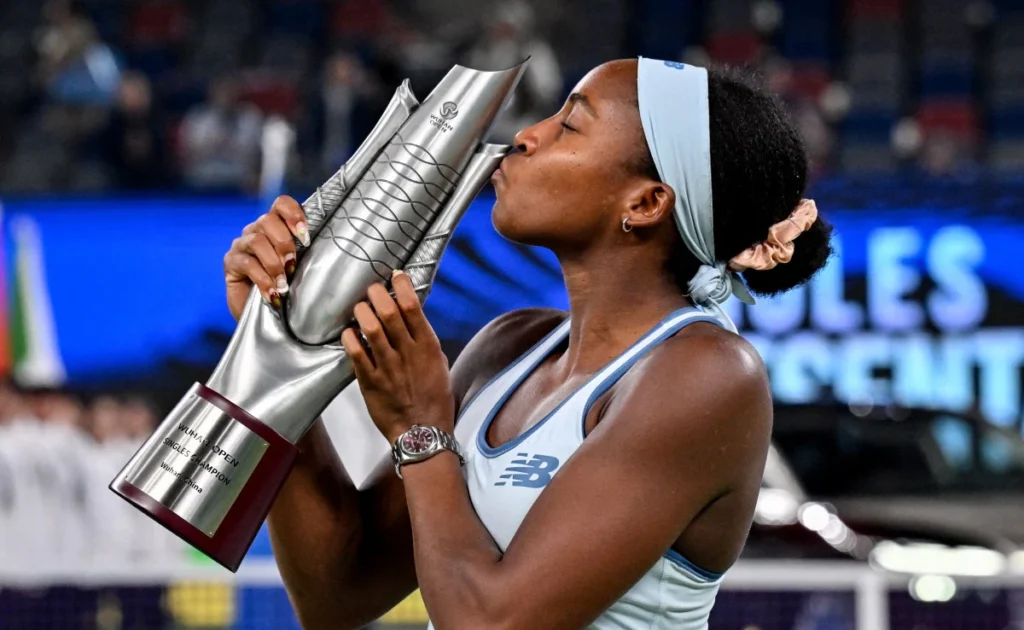
Coco Gauff is still succeeding and being victorious in tournaments, that is, a new one and the third one in her career, the third being at the WTA 1000 level, just 21 years old, and the third spot in the ranking is the contest that she turned in and Gauff’s victory, and on that day in Wuhan, October 12th, she was honored with her 11th title.  How It All Went Down? The match was opened with Gauff being very convincing and confident in the first set. She took the early lead, and at the end of the set, she won it with a score of 6-4. However, the second set became really exciting when Pegula joined the battle and played with great passion and energy. Here’s what happened in that crazy second set: Pegula jumped ahead 3-0 with a double break Gauff fought back but still trailed 3-5 She then held serve when down 5-3 to stay alive Gauff broke Pegula to love and tied things at 5-5​ The whole match lasted one hour and 44 minutes, and Gauff never dropped a set during the entire tournament. She became the first woman ever to start her career 9-0 in hard court finals. That’s a record that speaks volumes about her ability to perform when everything’s on the line.​ What Makes This Title Special Gauff did not look at this event as just another tournament. It was a very successful season for Gauff! She snatched up the third WTA 1000 title and the second trophy of 2025, having already won the French Open in June. The American athlete was also only the second to achieve the amazing feat of gaining titles in both the China Open and Wuhan Open tournaments. The first one was Caroline Garcia in 2017.​   It was 2015 when Venus Williams, the last American, won the Wuhan tournament. Hence, Gauff brought an end to a decade-old wait for the return of an American champion there.​   The fans who follow such high-profile international tournaments on digital platforms like Kheloexch can get a fair idea of the high standards of WTA 1000 events. Year by year, the competition gets tougher, and more skilled athletes can take the title without losing a single set—that is nothing less than sheer power showing up.​   The Backstory Gets Interesting Post-game, Gauff has a nice thing to say about her coach, Jean-Christophe Falla. He actually said to her that she shouldn’t go on this Asian tour after having a hard time at the US Open. But Gauff confessed that she was quite headstrong and went on to prove him wrong. “I can be quite obstinate,” Gauff said during her speech. She even joked that maybe her coach said that on purpose just to fire her up. Well, if that was the plan, it worked perfectly because she dominated the whole tournament.​ What Pegula Brought to the Table Jessica Pegula went through a lot to get to the final. In the semifinals, the 31-year-old defeated world number one Aryna Sabalenka. With this loss, Sabalenka’s remarkable 20-match victory streak in Wuhan has been stopped. Pegula had to play all her matches in the tournament for three sets, and she prevailed in seven of her last eight three-setters leading up to the final.​   Pegula was after her tenth career title but fell short again. In fact, this was the first time the two American athletes met in a final although they have played each other seven times before. They also used to play together in doubles and won a few titles together that way.​ A Display of Friendship The trophy ceremony greatly emphasized the respect between the two athletes. Gauff thanked Pegula for being one of the first people to greet her when she came to the tour. “It’s really meaningful for me,” Gauff said giving Pegula her attention.​   Pegula reciprocated by saying that Gauff is very mature for her age. These two, with the 21-to-31 age difference, have established a strong friendship. Even Kheloexch followers agree that when there is this much sportsmanship among the athletes, the rivalry is even more enjoyable to watch. Looking at the Numbers Let’s break down some key stats from this match and tournament: Gauff’s record in finals improved to 11-3 Pegula’s final record dropped to 9-11 This was their seventh meeting overall Pegula leads the head-to-head 4-3​ Gauff also matched a Serena record by going 9-0 in hard court finals to start her career. That’s some serious company to be mentioned alongside, and it shows Gauff’s potential for even bigger things ahead.​ Where She Goes From Here Having this title in her pocket, Gauff will be the highest-ranked American athlete at the WTA Finals in Riyadh. She was the champion of that same tournament last year, so she will be the one to defend her title. The energy from Wuhan is predicted to be a very good support to her, especially since she has already demonstrated that she can deal with such pressure situations as being down 5-3 in a final matches.​   This time her determination was a big factor and sometimes such a trait is the very thing that differentiates champions from others. Gauff affirmed her fighter’s spirit by not giving Pegula a third set, even though she was aware that her opponent had been excelling in those situations all week.

Tennis

Tearful Naomi Osaka Battles Injury To Reach Japan Quarter-Finals

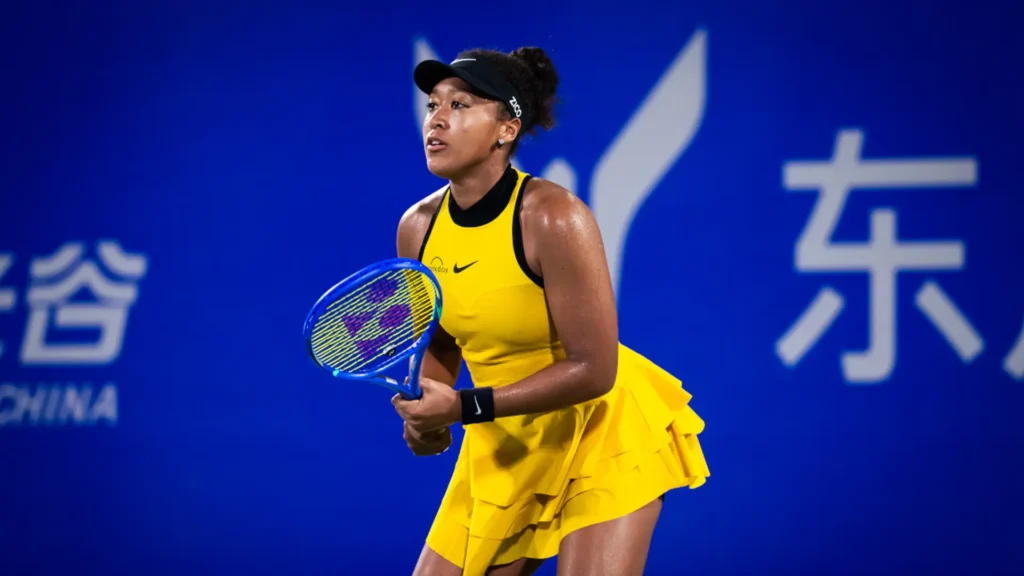
Naomi Osaka was an embodiment of determination while she went through a painful left leg issue and became one of the eight matches to compete in the Japan Open.  The first seed was clearly not happy after the match. She was practically in tears and at the same time dealing with such a heavy discomfort that she could hardly walk on the court.  A Hard Fight Against The Previous Champion Osaka met Suzan Lamens, who was defending her title from last year. The match became a real test of endurance and lasted more than two hours.  This is how it happened:​ Osaka won the first set in a close tiebreak with a score of 7-6​ Lamens came back really strong and took the second set 3-6​ The third set started wonderfully for Osaka as she raced to a 5-0 lead​ Then calamity struck as her left leg began to be a real troublemaker​ The Moment Everything Took A Turn All was going well until Osaka suddenly stopped during a rally while she was leading by a significant margin in the last set. The agony was evident on her face immediately.  She was able to complete that point after Lamens made an error, but it was clear to the audience that something was not right. Medical Help On Court Osaka asked for a medical break right after that scary moment. The medical team came out and worked on her left thigh while she sat there looking worried. When she came back to compete, her leg was wrapped up tight with thick strapping that you couldn’t miss.​ Her movement wasn’t the same anymore. She couldn’t run around like before and dropped the next two rounds. But she dug deep and closed things out on her third try at match point.​ Raw Emotion After The Final Point The second Osaka struck her last backhand to end the match, she bent over and covered her face. She was clearly holding back tears as she walked to shake hands at the net. The whole moment was heavy and showed just how much she was dealing with both physically and mentally.​ What Osaka Said About Her Struggle She made no attempt to conceal the intensity of the situation. After a very brief discussion in the court, Osaka went as far as to say sorry for her conduct. Eventually, she had to interrupt the interview because her leg was giving her so much trouble.   In the continuation of the conversation, she revealed more about what had happened after the match. She confessed to taking analgesics in order to literally overcome the match. Without the pills, it would have been next to impossible to finish the match.   Osaka mentioned her inability to move properly during the match’s closing stages. Nevertheless, she was optimistic and said she usually recovers quickly, thus, it would not be a problem to be ready for her next round. Her First Time Home In Years This tournament was a big deal because Osaka hadn’t participated in a singles match in her home country, Japan, for the past three years. Not only that, but the fact that the championship was hosted in the city with her last name made the experience even more amazing. The competitor, who was very close to the fans there, definitely wanted to make them happy.    Being the top seeded competitor, the 28-year-old finished the match against the Japanese Venus Williams, Wakana Sonobe, without any trouble in the first round. But then came the grueling and painful challenge with Lamens that left her injured. What Came Next? Osaka was supposed to face Jaqueline Cristian from Romania in the last eight. Fans at Kheloexch and other platforms were eager to see if she could keep going despite the problem. Unfortunately, the injury didn’t get better fast enough.​ She ended up pulling out before the match on Friday. Tournament officials said she hadn’t recovered from the left leg issue that hit her during the Lamens match. This meant Cristian moved on without competing.​ Looking At Her Recent Form Osaka came into this event ranked 16th around the world. She had some rough results lately:​ Lost in the second round at the China Open in late September​ Got knocked out early at the Wuhan Open the week before​ Made it to her first major semis since 2021 at the US Open earlier this year​ Owns four Grand Slam titles from earlier in her career​ Her exit left Leylah Fernandez as the top remaining seed at the event. Fans following coverage on Kheloexch and elsewhere were disappointed to see her tournament end this way.​ The Heart She Showed Osaka couldn’t complete the whole tournament, but she still managed to show something significant in her confrontation with Lamens. She had the option to cease her participation at the very moment the pain showed up. It would have been no surprise if she surrendered at that instance since everybody was likely to sympathize with her.​   On the contrary, she wrapped up her leg and fought on. The very last two rounds were full of her heart. She was not in good enough condition to move, but still, she found a way to be victorious in the match.​   The crying at the end was the absolute narrative. She was not doing tennis only. Being in her country, suffering from physical pain, and going through all the emotions made this match one that would be remembered by people.​   Osaka’s choice to withdraw from the next contest was a wise one. It is sometimes very hard to decide which is the stronger thing to do in order to move on or to step back; in her case, by stepping back she was going to know exactly when to heal. At the age of 28, she is still the owner of a long tennis career provided that she takes proper care of herself.

Scroll to Top